

Table of Contents
- How to Compare the Best Sauna Brands for Home Use
- Infrared vs Traditional Sauna for Home: Which Is Right for You?
- Home Sauna Installation Requirements: Electrical, Space, and Assembly
- Benefits of Home Sauna Therapy for Recovery and Longevity
- Indoor vs Outdoor Sauna Installation: What Works for Your Home
- Wood Selection: Cedar vs Hemlock and Long-Term Care
- Energy Efficiency, Operating Costs, and Permitting
- Frequently Asked Questions
Last Updated: September 25, 2026
How to Compare the Best Sauna Brands for Home Use
Finding the best sauna brands for home use comes down to three things: heater technology, construction quality, and how well a unit fits your space and electrical setup. This guide from My Luxury Home Spa breaks down each factor so you can compare brands on substance, not marketing claims.
The home sauna market has shifted. Buyers now expect low-EMF heaters, kiln-dried wood, and digital control panels as standard, not upgrades. A sauna brand worth your money explains its heater specs, wood sourcing, and warranty terms in plain language.
Below, we'll show you exactly how to evaluate brands, what installation really involves, and where most buyers get surprised.
Infrared vs Traditional Sauna for Home: Which Is Right for You?
Infrared saunas heat your body directly with radiant panels, while traditional steam saunas heat the air around you to high temperatures. Infrared units warm up faster and run on standard household current more often; traditional units deliver the classic sauna experience but demand more power and space.
| Feature | Infrared | Traditional |
|---|---|---|
| Warm-up time | 10-15 minutes | 30-45 minutes |
| Typical temp range | 120-150°F | 160-195°F |
| Electrical demand | Often plug-and-play | Usually hardwired |
| Best for | Recovery, smaller rooms | Heat tolerance, ritual |
Full-spectrum and far-infrared panels sit between these two categories, blending radiant heat with a gentler ambient temperature. If cardiovascular health and muscle recovery are your goals, infrared tends to fit a home setting with less renovation.
Home Sauna Installation Requirements: Electrical, Space, and Assembly
Home sauna installation requirements vary by heater type, but most buyers face the same checklist: adequate electrical load, a ventilated footprint, and either a pre-fabricated kit or a custom build. Planning these three items first prevents expensive rework later. This is also where the biggest gap in most buying guides lives, they list the checklist but never tell you how hard the work actually is or how long it takes.
Electrical Load and Wiring
Traditional heaters often need a dedicated 240-volt circuit and a hardwired connection, while many infrared models run on a standard 120-volt outlet. Heater wattage drives the circuit size: a small two-person infrared unit may draw 1,500-1,800 watts on a 120-volt, 15-amp circuit, while a four-person traditional heater commonly runs 6,000-8,000 watts on a 240-volt, 40-amp circuit. Check your panel's available capacity before ordering. A licensed electrician should confirm your electrical load and heater wattage match, and most jurisdictions require a permit and inspection for new 240-volt circuits.
A common pattern is that buyers underestimate the panel question. If your service panel is already near capacity, adding a 240-volt circuit can trigger a service upgrade, a project that costs far more than the sauna itself. Have an electrician look at the panel before you commit to a heater.
Space Planning and Ventilation
A ventilation system matters more than most buyers expect. Without airflow, moisture builds up and wood suffers. Leave clearance around the heater, plan ergonomic seating, and confirm ceiling height before delivery. Modular designs simplify this, but custom sauna builds need a contractor's measurements.
Plan for two vents: a low intake near the heater and a high exhaust on the opposite wall. That cross-flow keeps the room from turning into a steam trap and lets the wood dry between sessions. Indoor units also need moisture-resistant flooring and a drain or drip tray if you plan to pour water on the rocks.
Assembly Difficulty: DIY vs. Professional Installation
This is the part most guides skip. Pre-fabricated kit saunas are designed for two adults to assemble, but the realistic time and skill requirements vary widely:
| Task | Typical DIY Time | Skill Level | When to Hire a Pro |
|---|---|---|---|
| Panel and bench assembly (kit) | 4-8 hours | Beginner | If panels arrive damaged or the room is out of square |
| Electrical hookup (120V plug-in) | Under 1 hour | Beginner | Never, it's a plug-in |
| Electrical hookup (240V hardwire) | 2-4 hours | Licensed electrician | Always, permit and inspection required |
| Base prep (outdoor, level pad) | 1-2 days | Intermediate | If the ground slopes or drainage is poor |
| Custom build (framing, insulation, interior) | 1-3 weeks | Experienced carpenter | Almost always |
A realistic rule of thumb: a plug-in infrared kit is a weekend project for two people.
Ask the manufacturer whether the kit ships with a pre-wired control panel and a plug-in option. Some brands offer both 120V and 240V versions of the same cabin, which can save you the electrician visit entirely.
Request Pricing & Recommendations →
Before you order, answer three questions: What circuit does the heater need? Who is doing the electrical work? How many hours will assembly take? If you can't answer all three, you're not ready to buy.
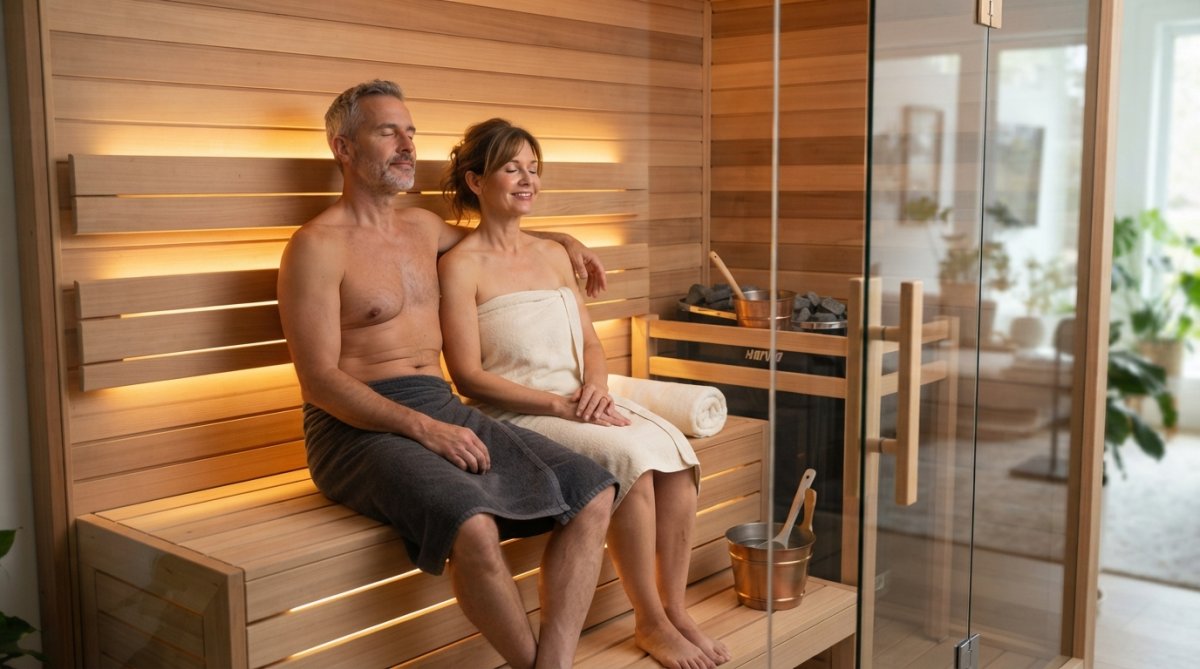
Benefits of Home Sauna Therapy for Recovery and Longevity
Regular sauna use supports cardiovascular health, muscle recovery, and stress management. Many athletes pair thermal therapy with cold plunge integration for a contrast routine that aids recovery.
Indoor vs Outdoor Sauna Installation: What Works for Your Home
Indoor installation wins on convenience and climate control; outdoor installation wins on space and the home spa experience. Indoor units fit basements, spare rooms, or converted closets, while outdoor cabins suit backyards and patios.
Wood Selection: Cedar vs Hemlock and Long-Term Care
Cedar wood resists moisture and holds up well in humid rooms, while hemlock costs less and performs well when properly sealed. Both are kiln-dried for stability, but they age differently.
What most guides miss: the wood matters less than the ventilation. A well-ventilated hemlock sauna outlasts a poorly vented cedar one every time. Prioritize airflow over species.
Energy Efficiency, Operating Costs, and Permitting
Two topics decide whether a home sauna is a joy or a headache, and almost no buying guide covers either in real detail: what it costs to run, and what it takes to legally install one outdoors. Here's the practical version.
What It Actually Costs to Run
Monthly cost = (heater watts ÷ 1,000) × hours per session × sessions per month × your electricity rate
| Heater Type | Typical Wattage | Session Length | Sessions/Month | Estimated Monthly Cost |
|---|---|---|---|---|
| Small infrared (2-person) | 1,500 W | 30 min | 12 | $4-$6 |
| Large infrared (4-person) | 3,000 W | 30 min | 12 | $9-$12 |
| Traditional (4-person) | 6,000 W | 45 min (incl. warm-up) | 12 | $25-$35 |
| Traditional (6-person) | 8,000 W | 45 min | 12 | $35-$45 |
Permitting and Zoning: The Step Most Buyers Skip
Permitting is the angle most guides overlook entirely, and it's the one that can stop a project cold. Many municipalities treat an outdoor sauna as an accessory structure, which can trigger setback rules, height limits, or a permit requirement. Some HOAs restrict outbuildings altogether, or cap the square footage of any structure on the lot.
- Check your HOA covenants first. If you're in an HOA, its rules can be stricter than the city's, and they're enforced privately. Read the architectural review section before anything else.
- Call your local planning or building department. Ask whether an outdoor sauna is classified as an accessory structure, whether it needs a building permit, and what setbacks apply.
- Confirm utility and easement locations. A sauna can't sit on top of a sewer line, gas line, or utility easement, and moving one after the fact is expensive.
- Get electrical permits separately. Indoor or outdoor, new 240-volt circuits almost always require a permit and inspection. Skipping this can void homeowner's insurance coverage on the circuit.
What most guides miss: the wood matters less than the ventilation. A well-ventilated hemlock sauna outlasts a poorly vented cedar one every time. Prioritize airflow over species.
An unpermitted outdoor sauna can create problems at resale. Buyers' inspectors flag unpermitted structures, and lenders may require them to be removed or retroactively permitted before closing.
| Factor | What to Check | Why It Matters |
|---|---|---|
| Heater type | Infrared vs traditional | Drives electrical needs and monthly cost |
| Wood | Cedar vs hemlock | Affects longevity, cost |
| Ventilation | Airflow and drainage | Prevents moisture damage |
| Permits | Local zoning rules | Avoids fines, rework, resale issues |
| Insulation | Wall and door quality | Reduces long-term operating cost |
Frequently Asked Questions
What type of sauna is best for home use?
The best type depends on your space, budget, and health goals. Infrared saunas heat the body directly with far-infrared rays and need only a standard 120V outlet, making them easier to install. Traditional steam saunas use a heater and stones to warm the air, requiring 240V wiring and more space. Both offer benefits of home sauna therapy, but infrared is often more practical for existing homes.
What should I look for when buying a sauna for my home?
Focus on heater type, wood quality, electrical requirements, and warranty. Cedar and hemlock are top choices for moisture resistance and durability. Check if the sauna is hardwired or plug-and-play, and confirm the electrical load your home can handle. Also review the manufacturer's warranty and whether the brand is an authorized dealer to avoid voided coverage. My Luxury Home Spa offers a curated selection of authorized brands with full warranties.
How much does a high-quality home sauna cost?
Pricing varies widely based on size, heater type, and materials. Entry-level infrared models may start lower, while custom traditional builds can cost significantly more. Installation and electrical work add to the total. For current pricing and personalized recommendations, visit My Luxury Home Spa's website or request a quote.
Are infrared or traditional steam saunas better for home installation?
Infrared saunas are generally easier to install because they often run on standard 120V household current and come as pre-fabricated kits. Traditional steam saunas require 240V wiring, a dedicated circuit, and often a licensed electrician. If you rent or have limited electrical capacity, infrared is the simpler choice. Traditional saunas provide a more intense heat experience but demand more planning.


Leave a comment