

Last updated: October 15, 2026
How Cold Plunge May Affect Joint Pain
Cold-water immersion may temporarily change how pain and stiffness feel. Cold exposure can reduce sensation in the treated area and may help some people feel more comfortable after activity. Results vary, and the effect is not the same as treating the underlying joint condition.
What Happens During Cold Exposure
Cold can temporarily reduce skin temperature and slow nerve signals, which may dull discomfort. It also changes blood flow near the skin. These effects may make a sore area feel less painful for a time, but a home cold plunge does not selectively treat a deep joint or remove the cause of swelling.
Short-Term Relief vs. Long-Term Change
Think of cold exposure as a possible comfort measure, not a cure. Any relief is temporary and can differ by person and condition. Cold-water immersion does not rebuild cartilage, reverse arthritis, or replace care recommended by a clinician.
Cold Therapy for Joint Pain: What the Evidence Shows
Research on cold-water immersion most often studies exercise recovery, not arthritis treatment. Evidence about pain or soreness after exercise should not be treated as proof that a cold plunge improves an arthritic joint. The American College of Rheumatology and Arthritis Foundation conditionally recommend thermal interventions, including locally applied heat or cold, for some people with osteoarthritis; that guidance does not establish a specific cold-plunge protocol.
Post-Exercise Soreness and Recovery
Cold-water immersion is commonly used after strenuous exercise. Some research suggests it may reduce the perception of muscle soreness for a short period. Those studies often involve healthy adults after exercise, so the results may not apply to people with arthritis or other joint conditions.
Arthritis and Persistent Joint Pain
For arthritis, evidence specific to full-body cold-water immersion is limited. The ACR/Arthritis Foundation osteoarthritis guideline conditionally recommends thermal interventions for hand, hip, and knee osteoarthritis. The guideline covers heat and cold approaches broadly; it does not establish that cold plunges change the course of arthritis.
Why the Evidence Is Hard to Interpret
- Small studies: Some trials include relatively few participants.
- Different cold methods: Cold packs, ice massage, cold-water immersion, and whole-body cryotherapy are different exposures.
- Different outcomes: Studies may measure pain, swelling, range of motion, or recovery at different times.
- Short follow-up: Short-term changes do not show whether a practice helps over months or affects disease progression.
- Different conditions: Results from healthy athletes may not apply to people with osteoarthritis, rheumatoid arthritis, or other inflammatory conditions.
Swelling and Inflammation
Cold applied locally is sometimes used for short-term comfort after an acute injury. That does not mean whole-body immersion is appropriate for every swollen joint or chronic condition. For ongoing swelling, new warmth or redness, or unexplained pain, get medical advice rather than relying on a plunge.
Soreness, Stiffness, and Range of Motion
Some people feel less sore or more comfortable moving after cold exposure; others feel stiffer. The osteoarthritis guideline discusses thermal interventions as one possible symptom-management option. It does not show that cold-water immersion repairs cartilage or replaces medical care. For a broader comparison of cold-water systems, see our cold plunge vs. ice bath guide.
| Area | What cold may do | What the evidence can tell us |
|---|---|---|
| Pain sensation | May temporarily dull discomfort | Response varies; evidence for arthritis-specific plunging is limited |
| Swelling | Local cold may help some acute symptoms | Do not assume whole-body immersion treats chronic swelling |
| Stiffness | May feel better or worse depending on the person | Track your response and stop if symptoms worsen |
| Exercise soreness | May reduce perceived soreness for some people | Exercise-recovery findings do not establish arthritis treatment |
Cold Plunge and Arthritis: Different Conditions May Respond Differently
“Arthritis” describes different conditions, and people respond differently to cold. A cold plunge that feels soothing to one person may increase discomfort or stiffness for another.
Osteoarthritis vs. Rheumatoid Arthritis
Osteoarthritis and rheumatoid arthritis have different causes and symptoms. The Arthritis Foundation overview of osteoarthritis and its overview of rheumatoid arthritis describe these differences. Cold may feel helpful to some people when a joint is uncomfortable, while others prefer warmth, particularly when stiffness is prominent. Ask your clinician which approach fits your condition.
Chronic Pain and Inflammatory Conditions
For chronic pain or an inflammatory condition, a plunge should not take the place of a care plan. If you try cold exposure, note how symptoms respond during the session and afterward. Stop if pain, stiffness, numbness, or other symptoms worsen.
Cold Plunge Duration: How Long and How Often for Joint Pain
There is no well-established cold-plunge duration or weekly schedule for treating joint pain. Water temperature, time, and frequency should not be treated as a universal arthritis protocol. If a clinician says cold-water immersion is appropriate for you, follow their advice and the equipment manufacturer’s instructions.
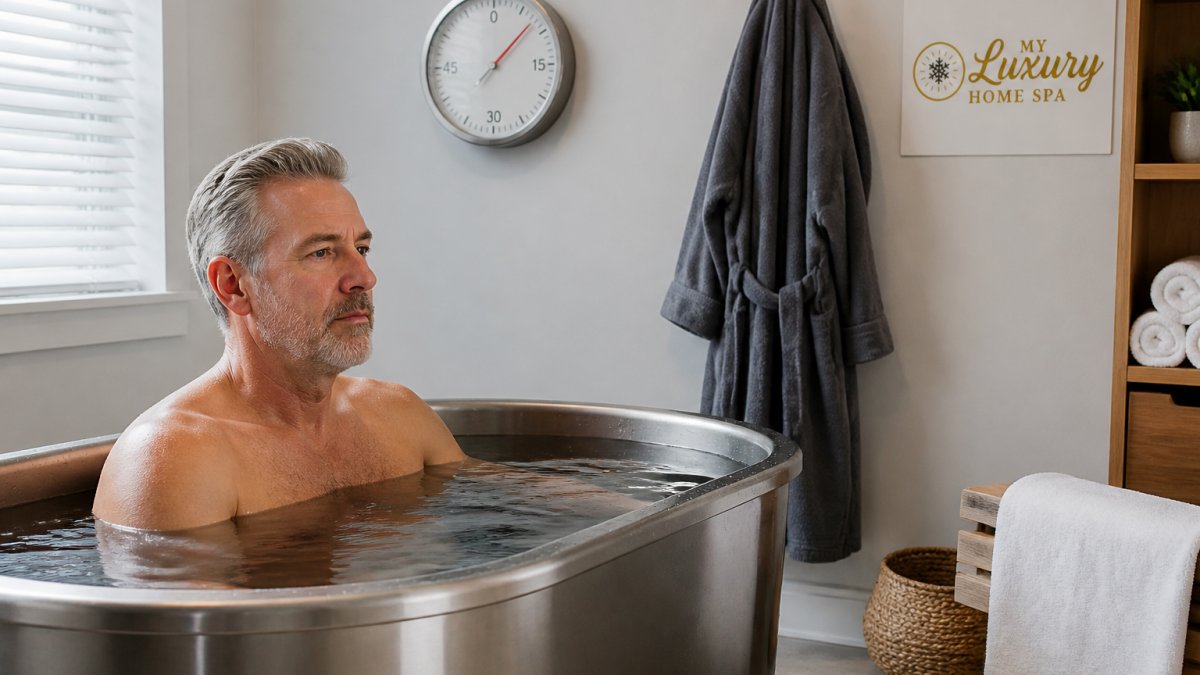
A Cautious Approach
- Check first: Ask a healthcare professional if you have arthritis, circulation concerns, heart or blood pressure conditions, reduced sensation, or another relevant health issue.
- Start conservatively: Use a brief exposure and a temperature that feels manageable. Do not push through pain, numbness, dizziness, or uncontrolled shivering.
- Monitor afterward: Notice whether pain, stiffness, or swelling improves, stays the same, or worsens in the hours after.
- Stop if symptoms worsen: Do not increase time or lower temperature to force a result.
Ice Bath vs. Cold Plunge: Which Works Better for Joints?
An ice bath and a chiller-equipped cold plunge both provide cold-water immersion. A chiller can make it easier to maintain a selected water temperature; an ice bath requires adding ice and checking the temperature. Neither option has been established as a treatment for arthritis or joint disease.

For a small, localized area, a cold pack may be simpler than full-body immersion. If you are considering a cold plunge for home use, compare system size, temperature control, cleaning requirements, and the manufacturer’s instructions. Read our cold plunge vs. ice bath comparison for more on the equipment differences.
Explore the DreamPod Ice Bath with Chiller
Safety Precautions and Contraindications for Joint Conditions
Cold-water immersion is not suitable for everyone. Talk with a healthcare professional before starting, especially if you have heart disease, uncontrolled blood pressure, Raynaud’s phenomenon, reduced circulation or sensation, or a condition that may be affected by cold. Cold exposure can put stress on the body.
Do not enter a plunge if you have an open wound or active infection. Ask your clinician before using cold immersion after recent joint surgery or if you have a cold allergy or history of cold-induced hives. Never use a cold plunge alone, and follow the manufacturer’s safety instructions.
Stop the session if you feel dizzy, unusually short of breath, confused, numb, or unable to control shivering. If a joint becomes increasingly swollen, red, hot, or painful, seek medical advice. For more general planning considerations, see our guide to what to know before buying a cold plunge.
How to Assess Your Response
Track symptoms and everyday function rather than relying on a single impression. Pain can change from day to day, and feeling less pain after a session does not necessarily mean the joint is less swollen or that the underlying condition has changed.
Five Things to Track
- Pain: Rate it on the same 0-to-10 scale before and after a session.
- Swelling: Note visible swelling or tightness, and whether it changes.
- Stiffness: Record how long morning stiffness lasts or rate its severity.
- Function: Choose a daily task, such as climbing stairs or gripping a jar, and note how it feels.
- Duration of any relief: Record whether a change lasts minutes, hours, or not at all.
A Simple Log
Use one line per session: date, water temperature, time in the tub, symptoms before and after, and any changes in daily activity. A notebook is enough. Share the notes with your healthcare professional if you are unsure whether to continue.
How to Read the Pattern
A pattern of repeatable short-term comfort may mean cold exposure feels useful to you. If pain, stiffness, swelling, or function consistently worsens, stop. A lack of change is also useful information; it may mean cold immersion is not the right comfort measure for you.
Set a Test Window
There is no proven test period for cold plunging with joint pain. If your healthcare professional agrees that it is appropriate, keep sessions consistent enough to compare your response and stop if symptoms worsen. Do not continue for weeks simply to complete a protocol.
Choosing a Cold Plunge for Home
If you are exploring cold-water immersion for general wellness or recovery, choose equipment based on your space, maintenance preferences, temperature control, and budget. My Luxury Home Spa carries DreamPod cold plunge options. Product availability, prices, shipping, and warranty terms can change, so check the current product page for details.
- DreamPod Ice Bath with Chiller: a chiller-equipped option for temperature control.
- DreamPod Ice Bath Flex with Chiller: a flexible tub paired with a chiller.
- DreamPod Cold Plunge Barrel Flex with Chiller: a barrel-style chiller system.
- DreamPod Ice Bath Flex: a flexible tub without a chiller.
A chiller can help maintain a selected temperature, which makes sessions easier to repeat. Consider cleaning and maintenance requirements, installation space, and the equipment’s instructions before choosing a model.
 DreamPod Ice Bath Flex with Chiller
 DreamPod Ice Bath Flex
Frequently Asked Questions
Can a cold plunge help with joint pain?
It may temporarily ease discomfort for some people, but evidence for cold-water immersion as a treatment for arthritis is limited. It does not repair cartilage or replace medical care. Ask a healthcare professional whether it is appropriate for your condition.
How long should you stay in a cold plunge for joint pain?
There is no established cold-plunge duration for treating joint pain. If a healthcare professional says cold-water immersion is appropriate, follow their guidance and the equipment manufacturer’s instructions. Stop if you feel numb, dizzy, unusually short of breath, or unable to control shivering.
Is an ice bath or cold plunge better for joint pain?
Both provide cold-water immersion. A chiller-equipped plunge can make it easier to maintain a selected temperature, while an ice bath requires adding ice. Neither has been established as an arthritis treatment.
What are the risks of cold plunging with arthritis?
Cold may worsen stiffness or discomfort for some people. Cold immersion may also be unsuitable for people with certain heart, blood pressure, circulation, or sensation issues. Ask your healthcare professional before starting, and never plunge alone.
Joint pain can make it difficult to know which wellness options are worth considering. My Luxury Home Spa offers DreamPod cold plunge systems for home wellness and recovery routines. Review the product details and consult your healthcare professional to decide whether cold-water immersion fits your needs.


Leave a comment