

Table of Contents
- Cold Plunge vs Ice Bath: Key Differences at a Glance
- How Cold Water Immersion Affects Recovery
- Cold Plunge Duration for Recovery: How Long Is Enough?
- Best Practices for Cold Therapy: Temperature, Timing, and Progression
- Cold Plunge Equipment Maintenance: Ice Baths vs Chiller Systems
- Cost, ROI, and Environmental Impact: DIY Ice vs Commercial Units
- Safety, Contraindications, and Who Should Avoid Cold Plunges
- Choosing the Right Cold Plunge System for Your Home
- Conclusion
- Frequently Asked Questions
Last Updated: September 28, 2026
Cold Plunge vs Ice Bath: Key Differences at a Glance
The cold plunge vs ice bath comparison comes down to one core distinction: an ice bath is water cooled by added ice, while a cold plunge is a purpose-built system that actively chills and circulates water to a set temperature. Both deliver cold water immersion. Only one gives you a repeatable, measurable session every time.

This guide from My Luxury Home Spa breaks down recovery outcomes, session timing, maintenance demands, and real cost differences so you can choose with clear eyes.
Here is the short version. Ice baths are cheap to start and impossible to standardize. Cold plunges cost more upfront and remove nearly every variable that makes cold therapy frustrating: melting ice, drifting temperatures, and daily setup. For anyone treating recovery as a routine rather than an experiment, the chiller wins.
| Factor | Ice Bath | Cold Plunge (Chiller System) |
|---|---|---|
| Temperature control | Manual, drifts as ice melts | Set digitally, holds steady |
| Setup per session | Buy ice, fill, monitor | Press a button |
| Recurring cost | Ice purchases add up | Electricity only |
| Water quality | Dump after each use | Filtration and sanitation |
| Best for | Occasional use, low budget | Daily recovery protocols |
Cleveland Clinic overview of cold water immersion
How Cold Water Immersion Affects Recovery
Cold water immersion works through two distinct physiological events, and confusing them is why most people get mediocre results. The first is vascular: cold drives vasoconstriction, narrowing the arterioles and venules near the skin and shunting blood toward the core. When you exit and rewarm, those vessels dilate and circulation floods back through the peripheral tissue. That constrict-then-flush cycle is the mechanism behind most of the recovery reputation cold therapy has earned.
The second event is neurological and hormonal, and it is the one that actually separates a useful session from a wasted one. Sudden cold exposure triggers the cold shock response: an involuntary gasp, a spike in breathing rate, a rise in heart rate and blood pressure, and a surge of norepinephrine. That cascade is a hormetic stressor, a controlled challenge that, repeated at the right dose, may drive adaptation in the same way a hard training session does. The dose is the whole game. Too little cold and you get no signal. Too much and you get a stress response your body spends days recovering from.
Muscle Soreness and Inflammation
Delayed onset muscle soreness, the ache that peaks 24 to 72 hours after hard training, is where cold therapy earns most of its reputation. Cold exposure narrows blood vessels and may help limit localized swelling and systemic inflammatory signaling after intense effort. But there is a real trade-off most guides skip: cold water immersion in the immediate post-training window can blunt the inflammatory and cellular signaling that drives muscle adaptation. In plain terms, plunge right after a strength session and you may dampen the very stimulus you trained for.
A more defensible pattern is to separate cold from the adaptation window. Save immersion for rest days, competition recovery, or several hours after a session when the training signal has already been laid down. Many practitioners find cold water immersion most useful for managing muscle fatigue between training blocks rather than after every workout.
The Hormetic Dose: Beginners vs. Athletes
Here is the angle most comparisons miss. Cold adaptation is not a single on/off switch, it is a dose-response curve, and the correct dose looks completely different for a first-timer than for a trained athlete.
For a beginner, the hormetic stressor is the cold shock response itself. The goal is not minutes in the water; it is teaching the nervous system to stay calm through the first 30 to 60 seconds of involuntary gasping and vasoconstriction. A beginner who can enter at 55°F, control their breathing, and exit after two minutes has already captured most of the adaptation available at that stage. Pushing duration or temperature before that control is established just adds risk without adding signal.
For a trained athlete, the cold shock response is old news. The nervous system has habituated, the gasp reflex is muted, and the useful stressor shifts to sustained thermal load, longer exposure at lower temperatures that drives deeper peripheral vasoconstriction and a larger rewarming response. This is why an advanced protocol of 5 to 10 minutes at 45°F to 50°F is genuinely different in kind, not just in degree, from a beginner's two minutes at 58°F. The athlete is chasing a different part of the curve.
The practical takeaway: match the dose to your adaptation stage, not to someone else's session log. A beginner copying an athlete's protocol gets the risk without the reward. An athlete stuck on beginner doses stops progressing.
Cold Plunge Duration for Recovery: How Long Is Enough?
Most recovery protocols call for two to ten minutes in water between roughly 50°F and 59°F. Beginners should start at the warmer end for two to three minutes and extend duration before dropping temperature. Cold plunge duration for recovery matters less than consistency: five controlled minutes, four days a week, beats one brutal session you dread repeating.
Progression follows a simple rule. Change one variable at a time. Add thirty seconds before you subtract two degrees.
- Beginner: 2-3 minutes at 55-59°F
- Intermediate: 3-5 minutes at 50-55°F
- Advanced: 5-10 minutes at 45-50°F, with supervision
Watch for numbness, confusion, or uncontrolled shivering. Any of those means the session is over, regardless of the clock.
Best Practices for Cold Therapy: Temperature, Timing, and Progression
Best practices for cold therapy start with thermoregulation: your body's ability to hold core temperature under cold stress. That capacity varies by person, body composition, and cold tolerance built over months, not days. Comparing your session length to someone else's is a fast route to overdoing it.
Timing matters too. Morning sessions tend to support alertness, while evening plunges can interfere with sleep for some people. If you are pairing cold with heat, do the hot session first. Moving from a sauna into cold water amplifies the vascular response, and many recovery protocols are built around exactly that contrast.
- Keep sessions under ten minutes
- Never plunge alone when pushing temperature limits
- Skip alcohol before and after
- Warm up gradually, not with a hot shower immediately after
Cold Plunge Equipment Maintenance: Ice Baths vs Chiller Systems
Maintenance is where ice baths and chiller systems separate fastest. An ice bath is drained after nearly every use, which means refilling, hauling ice, and scrubbing the tub on a rotating basis. A chiller system circulates water through filtration and sanitation continuously, so you change water on a schedule rather than after every session.

Water filtration does the heavy lifting on a chiller system. Most units combine a mesh intake screen, a fine cartridge filter, and some form of ozone or chemical sanitation. Filters need inspection every few weeks and replacement on the manufacturer's schedule. Skip that, and you get cloudy water and a strained pump.
Drainage and winterization are the two tasks owners underestimate. Plan where the water goes before you drain the tub, and if the unit lives outdoors in a freezing climate, follow the winterization steps in the manual exactly. Freeze damage is one of the most common reasons a warranty claim gets denied.
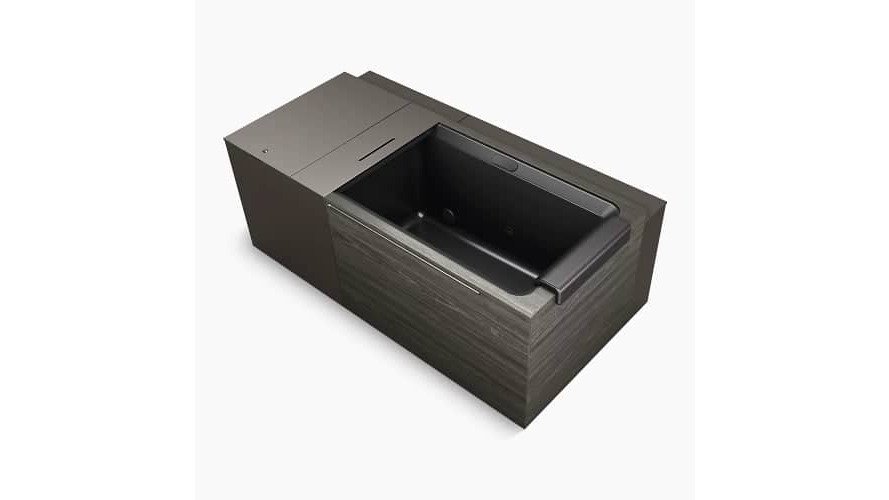
KOHLER x Remedy Place Ice Bath →
| Maintenance Task | Ice Bath | Chiller System |
|---|---|---|
| Water change | After most sessions | Every few weeks |
| Filter care | None | Inspect and replace |
| Sanitation | Manual | Automated circulation |
| Winterization | Drain fully | Drain and store per manual |
Cost, ROI, and Environmental Impact: DIY Ice vs Commercial Units
Most comparisons stop at the sticker price. The real question is total cost of ownership over three to five years, and that is where DIY ice and a chiller system diverge sharply.
The DIY Ice Math
A bag of ice runs a few dollars, and a typical ice bath session needs 20 to 40 pounds of it to pull a tub down to a useful temperature, depending on starting water temperature and tub volume. At daily use, that is a recurring consumable cost that never stops, plus the time to buy, haul, and dump it. Add the water itself: a standard bathtub holds roughly 40 to 60 gallons, and dumping it after every session means paying for that water again the next day. Over a year of daily use, the ice and water line items alone can rival the price of an entry-level chiller, and you still have none of the convenience.
The Chiller Math
A chiller system front-loads the cost and then runs on electricity. A typical home cold plunge chiller draws in the range of a few hundred watts while cooling, and once the water is at setpoint it cycles to maintain temperature rather than running continuously. The recurring costs are electricity, filter replacements on the manufacturer's schedule, and periodic water changes, every few weeks rather than every session. That stretches both the water bill and the labor.
Environmental Impact: Water Usage Is the Real Story
The sustainability angle is the one almost no guide covers, and it is straightforward. A DIY ice bath dumps 40 to 60 gallons after nearly every session. A recirculating chiller system filters and sanitizes the same water for weeks, so the water footprint drops by an order of magnitude. If you plunge daily, the difference over a year is measured in thousands of gallons. For anyone weighing environmental impact alongside recovery, the chiller is the lower-impact choice by a wide margin, and it is not close.
U.S. Environmental Protection Agency water efficiency guidance
What to Actually Compare
When you run the numbers, the decision usually comes down to three variables:
- Frequency of use. Occasional users can absorb the DIY ice cost. Daily users almost always come out ahead with a chiller once you count ice, water, and time.
- Time value. If your time is worth anything, the setup and teardown labor of an ice bath is a real cost that never appears on a receipt.
- Water and energy. Recirculation wins on water; electricity is the chiller's trade-off. For most home users, the water savings dominate.
For a home setup, My Luxury Home Spa carries several options that fit different spaces and budgets. The DreamPod Ice Bath with Chiller pairs a fiberglass tub with an external chiller and app control, a practical entry point for a dedicated recovery corner. The Sierra Spa Cold Plunge runs on a standard outlet with integrated cooling and heating. At the top of the range, the KOHLER x Remedy Place Ice Bath offers an 85-gallon, triple-insulated basin built for high-frequency use. Optimizing these physical cooling protocols often requires balancing hardware investments with the right recovery supplement options to ensure your physiological systems remain primed for consistent training cycles.
Safety, Contraindications, and Who Should Avoid Cold Plunges
Cold plunges are not appropriate for everyone, and this is the section most articles skip. Cold water immersion places real stress on the cardiovascular system. If you have heart disease, uncontrolled high blood pressure, or a circulatory condition, talk to a physician before your first session.
Contraindications worth taking seriously include pregnancy, Raynaud's phenomenon, and any condition that affects temperature sensation. If you take medication that alters heart rate or blood pressure, get medical clearance first. None of this is a reason to avoid cold therapy forever. It is a reason to have the conversation before you buy the equipment.
- Get physician approval if you have any cardiovascular condition
- Never plunge alone when using extreme temperatures
- Exit immediately on chest discomfort, confusion, or severe numbness
- Keep children away from any cold plunge without direct supervision
American Heart Association guidance on cold exposure and heart health
Choosing the Right Cold Plunge System for Your Home
The right system depends on three things: how often you will use it, how much space you have, and whether you want cold only or cold and heat in one unit. Daily users should prioritize a chiller with reliable filtration. Occasional users can get by with less. Anyone pairing cold with a sauna should look at dual-temperature units.
Here is how the options compare across the features that actually decide the purchase:
| Model | Price | Temperature Range | Best For |
|---|---|---|---|
| DreamPod Ice Bath with Chiller | $6,200 | 37°F to 104°F | First dedicated plunge, app control |
| Sierra Spa Cold Plunge | $6,990 | 37°F to 104°F | Plug-and-play home gym setup |
| Finnmark SoulCold 1-Person | $6,990 | 34°F to 108°F | Cold and hot contrast in one tub |
| Colderatti Hyperpod Pro | $13,700 | 32°F to 104°F | Compact spaces, remote chiller |
| KOHLER x Remedy Place Ice Bath | $17,425 | Precision controlled | High-frequency, luxury installations |
Two things separate these beyond price. The Colderatti Hyperpod Pro uses a vertical footprint and lets you place the chiller up to roughly 40 feet away, which matters when floor space is tight or you want the equipment noise out of the room. The KOHLER unit leans on triple insulation and an 85-gallon basin for consistent temperatures during long or repeated sessions.

Homeowners who want a dedicated daily recovery routine without hauling ice. If you are pairing cold with a sauna, prioritize a dual-temperature unit like the Finnmark SoulCold.
Conclusion
Setting up cold therapy at home raises real questions about space, wiring, drainage, and long-term maintenance, and getting those wrong is expensive. My Luxury Home Spa specializes in premium cold plunges built to handle daily use, backed by full manufacturer warranties and authorized-dealer authenticity. Our team helps you match a system to your room, your routine, and your budget, with free delivery on most items and flexible payment options. Get started with My Luxury Home Spa and turn a corner of your home into a recovery space you will actually use.
Frequently Asked Questions
Is a cold plunge better than an ice bath?
A cold plunge with a chiller holds a steady temperature, so every session is consistent. A DIY ice bath starts warm and warms further as ice melts, so the cold exposure varies. For recovery routines that depend on repeatable conditions, a chiller-equipped cold plunge removes the guesswork and the recurring cost of buying ice.
How long should you stay in a cold plunge for optimal recovery?
Most recovery protocols call for 2 to 10 minutes at 45 to 55 degrees Fahrenheit. Beginners should start at the shorter end and a milder temperature, then extend time or lower the setting gradually. Watch for numbness, shivering you cannot control, or dizziness, and exit immediately if any appear.
What is the difference in maintenance between an ice bath and a cold plunge unit?
An ice bath requires draining and refilling after most sessions, plus a steady supply of ice. A cold plunge with a chiller uses filtration, circulation, and sometimes ozone sanitation to keep water clean for weeks. Routine cold plunge equipment maintenance means checking filters, testing water, and wiping surfaces rather than hauling buckets.
Are there health risks associated with cold plunges?
Cold water immersion triggers a cold shock response: rapid breathing, a spike in heart rate, and vasoconstriction. That stress is why people with cardiovascular conditions, uncontrolled blood pressure, or circulatory disorders should get physician clearance first. Never plunge alone, enter slowly, and keep sessions short until your cold tolerance builds.
Can a cold plunge help with knee pain or joint issues?
Cold immersion is used for inflammation reduction and post-workout recovery, and some people with joint discomfort find short sessions helpful. It is not a treatment for arthritis or any diagnosed condition. If you have knee problems, talk to your doctor before starting, and begin with milder temperatures and shorter durations.


Leave a comment