

Last Updated: October 28, 2026
Infrared Sauna for Athlete Recovery: Benefits, Timing & Safety
Infrared saunas are becoming a popular addition to athletic recovery routines. But what does research actually show about muscle soreness, performance, and post-workout heat exposure?
This guide separates promising findings from unproven claims and explains how athletes can approach infrared heat as part of a balanced recovery routine.
Can infrared sauna use help athletes recover?
Infrared sauna sessions may help athletes feel more relaxed and less sore after exercise. Small controlled studies have also reported promising results for certain neuromuscular performance measures. However, evidence remains limited, and benefits depend on the athlete, training load, heat exposure, and recovery protocol.
Infrared sauna use should complement—not replace—sleep, nutrition, hydration, and appropriate training recovery.
- Muscle comfort: Heat may reduce perceived soreness and stiffness.
- Performance: Small studies show some promising results, but broader benefits are not established.
- Timing: Recover from exercise-related dehydration and excessive heat exposure before adding sauna heat.
- Duration: Start conservatively and follow the manufacturer's instructions.
- Safety: Stop immediately if dizzy, weak, nauseated, or overheated.
Athletic recovery involves more than reducing soreness. It also includes restoring fluids, replenishing energy, allowing tissue adaptation, and managing fatigue between training sessions.
Infrared saunas use radiant heating elements to warm occupants while generally operating at lower cabin air temperatures than traditional high-heat saunas.
For some athletes, this creates a comfortable environment for relaxing after exercise. Others may prefer traditional saunas, mobility work, compression therapy, or simply additional rest.
The important distinction is between feeling recovered and demonstrating measurable improvements in strength, power, or subsequent training performance.
What the Research Shows About Infrared Sauna Recovery
Infrared-specific athletic recovery research has produced some encouraging findings. However, the available research is relatively small, and different studies use different temperatures, exposure times, populations, and training protocols.
2023 Study: Post-Exercise Recovery in Basketball Players
A study published in Biology of Sport evaluated 16 male basketball players following resistance and plyometric exercise.
Participants completed either passive recovery or a 20-minute infrared sauna session at approximately 43°C (109°F).
Researchers observed:
- Less severe subjective muscle soreness after infrared sauna use.
- Higher perceived recovery compared with passive recovery.
- A smaller decrease in countermovement-jump performance following exercise.
The results suggest that infrared sauna exposure may help certain athletes following strenuous resistance training. However, the study included only 16 participants and does not establish universally effective recovery protocols.
Read the 2023 study on PubMed.
2025 Study: Repeated Infrared Sauna Use
A separate 2025 study followed 40 female team-sport athletes over a six-week strength and power training period.
The infrared sauna group used a 10-minute session at 50°C (122°F) following training, three times per week.
Researchers found that infrared sauna use did not significantly improve muscle hypertrophy compared with the control condition. Some performance measures suggested potential benefits in power production, but the overall findings were mixed.
The results support further research rather than a conclusion that regular infrared sauna use will reliably increase strength, muscle size, or athletic performance.
Read the 2025 study on PubMed.
Promising Does Not Mean Proven
Controlled research provides some evidence that post-exercise infrared sauna sessions may improve perceived recovery and selected performance measures.
However, these early findings do not establish an ideal treatment schedule or guarantee better results for every athlete or sport.
Muscle Soreness, Stiffness, and Joint Comfort
One of the main reasons athletes use infrared saunas is the sensation of warmth and relaxation after exercise.
Heat may make muscles feel less stiff and help some people move more comfortably before gentle mobility work.
Subjective improvements are meaningful for comfort, but they should not automatically be interpreted as faster muscle repair or complete recovery from training stress.
Warmth may also temporarily improve comfort around stiff joints. However, infrared sauna use does not correct structural joint problems or treat underlying joint disease.
Circulation, Inflammation, and Performance Claims
Heat exposure increases skin blood flow and produces cardiovascular responses that help the body regulate temperature.
These physiological effects are real, but they do not mean that an infrared sauna automatically delivers faster muscle repair, eliminates inflammation, or improves athletic performance.
Claims that infrared sauna sessions remove toxins, accelerate injury healing, or dramatically increase strength are not adequately supported by current athletic recovery research.
The practical conclusion: Infrared heat may support a comfortable post-training routine, while measurable training adaptations still depend heavily on programming, nutrition, recovery time, and sleep.
Infrared Sauna After Workout: Timing and Protocols
The best time for an infrared sauna session depends on training intensity, hydration, environmental temperature, and the athlete's goals.
Sauna use adds another heat exposure to the body. Following strenuous exercise—particularly in hot conditions—additional heat may increase dehydration and cardiovascular strain.
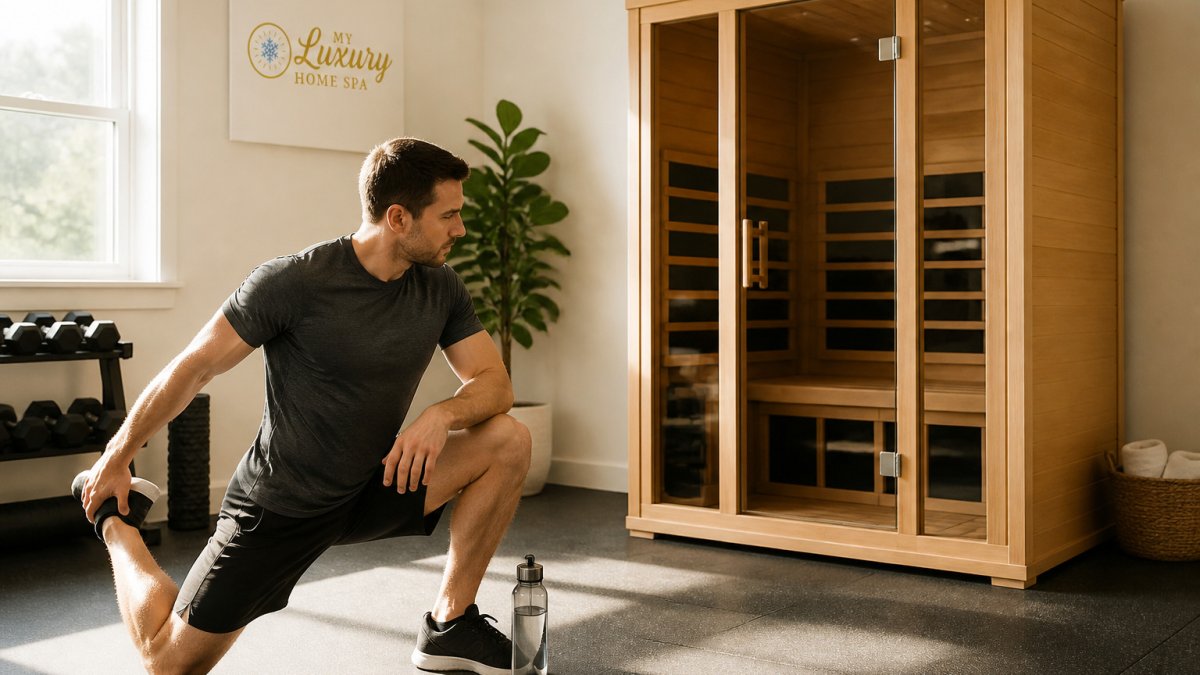
Timing Relative to Training
- After moderate exercise: Consider a short session once you have cooled down and addressed hydration needs.
- After intense exercise: Prioritize cooling, fluids, food, and rest before deciding whether additional heat is appropriate.
- Before competition: Avoid unfamiliar or prolonged heat exposure that could leave you fatigued or dehydrated.
- On recovery days: Some athletes may find a conservative session relaxing, provided they tolerate heat well.
Structured heat acclimation is a separate training strategy that should not be confused with casual sauna use for perceived recovery. Competitive athletes should develop heat-acclimation protocols with qualified sports-performance professionals.
A Practical Infrared Sauna Session Protocol
For a generally healthy adult athlete who has been cleared for sauna use, a conservative approach is more appropriate than trying to maximize time or temperature.
- Assess your condition. Do not begin if overheated, unwell, dizzy, or dehydrated.
- Cool down and rehydrate. Allow your breathing and heart rate to settle after exercise.
- Follow the sauna instructions. Select a comfortable, manufacturer-approved temperature and session duration.
- Begin with a short exposure. Approximately 5–10 minutes may be a reasonable familiarization period for some healthy adults, depending on the sauna and individual tolerance.
- Stop when needed. Exit promptly if uncomfortable, weak, lightheaded, or nauseated.
- Recover afterward. Cool down, replace fluids, and monitor how you feel before your next workout.
The Thera360 Plus Portable Infrared Sauna provides a space-saving option for personal wellness routines without the footprint of a permanent sauna cabin.
Tailoring Infrared Sauna Use to Your Sport
- Strength and power athletes: Consider sauna exposure as an optional recovery practice rather than a proven muscle-growth tool.
- Endurance athletes: Be especially mindful of cumulative heat exposure and dehydration following long training sessions.
- Team-sport athletes: Recovery scheduling should account for games, practices, travel, and next-day performance requirements.
- Recreational fitness enthusiasts: Comfort, consistency, and heat tolerance may be more important than achieving a specific protocol.
| Goal | Suggested Approach | Important Consideration |
|---|---|---|
| Relaxation | Short, comfortable session after cooling down | Avoid additional heat when already overheated. |
| Muscle comfort | Gentle heat followed by comfortable mobility work | Less stiffness does not necessarily mean faster tissue recovery. |
| Performance recovery | Individualized use alongside established recovery practices | Evidence remains limited and results vary. |
| Heat acclimation | Professionally supervised heat-exposure planning | Requires additional monitoring and a defined training objective. |
How Long to Use an Infrared Sauna for Training Recovery
There is no universally established infrared sauna duration that optimizes athletic recovery.
Some controlled studies have used approximately 10–20 minutes at specific temperatures, but these research protocols should not be treated as instructions for every athlete or sauna model.
For new users, beginning with a short exposure and gradually evaluating tolerance is more prudent than immediately attempting longer sessions.
Always follow the sauna manufacturer's temperature and duration limits.
Track Your Response Instead of Chasing More Heat
Keep a simple log of how sauna use fits into your training:
- Workout type and intensity
- Sauna duration and temperature
- Hydration and heat conditions
- Perceived soreness and fatigue afterward
- How you feel during the next training session
Patterns may help you identify what feels comfortable, although personal logs cannot establish that sauna use caused a performance improvement.
Infrared Sauna Hydration and Heat Safety for Athletes
Hydration is especially important when combining exercise with sauna use.
Both activities can increase sweat loss. An athlete who finishes training already dehydrated may be more vulnerable to dizziness, weakness, or heat-related illness with additional exposure.
The Centers for Disease Control and Prevention's guidance on heat and athletes emphasizes hydration, gradual adjustment to heat, and stopping activity when feeling faint or weak.
Before Your Session
- Rehydrate appropriately after exercise.
- Allow your body to cool down following strenuous activity.
- Consider recent heat exposure and exercise intensity.
- Avoid alcohol before and during sauna use.
- Do not enter if feeling unwell, faint, or overheated.
During and After Your Session
- Pay attention to dizziness, nausea, headache, and unusual weakness.
- Exit immediately if symptoms of heat intolerance develop.
- Cool down gradually in a safe environment.
- Replace fluids and electrolytes as appropriate to your sweat losses.
- Seek medical assistance for concerning or persistent symptoms.
Never Use a Sauna to Push Through Heat Illness
Do not enter a sauna if you suspect heat exhaustion, heatstroke, or another acute heat-related condition.
If someone experiences confusion, collapse, seizure, or other signs of severe heat illness, call emergency services and begin appropriate cooling measures while awaiting help.
Infrared Sauna vs. Traditional Sauna for Athletes
Both infrared and traditional saunas expose the body to heat, but they create different environments.
Infrared saunas use radiant heaters and generally operate at lower air temperatures. Traditional saunas use a heater to warm the sauna room and often include the option of adding water to approved heated stones.
| Feature | Infrared Sauna | Traditional Sauna |
|---|---|---|
| Heating method | Infrared radiant heating elements | Heated air and sauna heater |
| Typical environment | Often lower cabin air temperature, although high-heat infrared models exist | Generally higher cabin air temperature |
| Humidity | Generally dry | Can include added humidity from water on stones |
| Heat experience | Radiant heat, with temperature and heating technology varying by model | Classic high-heat sauna experience |
| Athletic recovery evidence | Small infrared-specific studies show promising results | Broader heat-exposure literature, but protocols differ |
| Proven superiority | Not established | Not established |
Neither sauna type has been conclusively shown to be the best choice for all athletes.
For a broader home-planning comparison, explore our Infrared vs. Traditional Sauna Buying Guide.
How Infrared Sauna Compares With Other Recovery Methods
Infrared saunas are one option within a larger recovery toolkit. Different methods serve different purposes, and the strongest foundation remains adequate sleep, nutrition, hydration, and sensible training progression.
| Recovery Method | Potential Role | Consideration |
|---|---|---|
| Infrared sauna | Relaxation, warmth, perceived soreness relief | Adds heat stress and fluid loss. |
| Compression therapy | Temporary comfort and perceived recovery support | Benefits vary with protocol and individual. |
| Cold immersion | May reduce perceived soreness in some settings | Frequent immediate use after strength training may interfere with some adaptations. |
| Gentle mobility | Maintaining comfortable movement and flexibility | Avoid forcing painful ranges of motion. |
| Sleep and nutrition | Foundational support for recovery and training adaptation | Should not be displaced by recovery devices. |
When Each May Be Appropriate
- Choose infrared sauna when you want comfortable warmth and relaxation and can tolerate heat safely.
- Consider compression therapy when you prefer a non-heating recovery experience.
- Consider cold immersion when it fits a specific recovery objective, accounting for the type and timing of training.
- Prioritize rest and medical evaluation when pain, illness, exhaustion, or possible injury is present.
My Luxury Home Spa offers compression and recovery equipment for customers comparing different approaches to personal wellness and post-training comfort.
Contraindications, Limits, and Who Should Check With a Doctor First
Infrared sauna use is not appropriate for everyone. Heat can affect blood pressure, heart rate, circulation, and hydration status.
Consult a qualified healthcare professional before sauna use if you have:
- Cardiovascular disease, heart rhythm problems, or unstable blood pressure.
- A history of fainting or significant heat intolerance.
- A condition affecting sweating or temperature regulation.
- Kidney disease or medically restricted fluid intake.
- A diagnosed joint condition, active injury, or unexplained pain.
- Medications that influence hydration, blood pressure, or heat tolerance.
- Pregnancy or another condition for which heat exposure may be unsafe.
Do not use a sauna during acute illness, fever, significant dehydration, or suspected heat-related illness.
Children and adolescents require individualized guidance and appropriate adult supervision. Recreational sauna advice for healthy adults should not automatically be applied to young athletes.
Choosing a Home Infrared Sauna for Your Training Routine
The best infrared sauna for an athlete is not necessarily the largest, hottest, or most expensive model.
Consider how the sauna fits your home, training schedule, preferred heat environment, available electrical supply, and intended number of occupants.
At My Luxury Home Spa, two options worth comparing are the portable Thera360 Plus and the premium Finnmark FD-2 Full-Spectrum Infrared Sauna.
Option 1: Portable Infrared Sauna
Thera360 Plus Portable Infrared Sauna

The Thera360 Plus offers a portable infrared sauna experience without the space requirements of a permanent wooden cabin.
Its foldable construction makes it an appealing option for apartments, smaller home gyms, and multipurpose wellness spaces.
Why Athletes May Consider It
- Portable construction for homes with limited space.
- Full-spectrum infrared heat with integrated red and near-infrared lighting technology.
- Convenient personal sessions without permanent sauna construction.
- A compact option for establishing a consistent wellness routine.
Best for: Individuals who want a portable, space-saving infrared sauna for personal wellness.
Consider another option if: You prefer a full wooden cabin, permanent bench seating, or room for more than one person.
Option 2: Premium Full-Spectrum Infrared Sauna
Finnmark FD-2 Full-Spectrum Infrared Sauna
The Finnmark Designs FD-2 offers a premium two-person infrared sauna experience for homeowners building a dedicated recovery or wellness space.
Unlike basic far-infrared-only cabins, the FD-2 combines Spectrum Plus short-wave infrared heaters with Spectrum Carbon 360° long-wave panels.
The sauna also includes integrated red-light and near-infrared ceiling illumination, a cedar interior, insulated construction, touchscreen controls, and Bluetooth audio.
Why Athletes May Consider It
- Full-spectrum heating: Combines short-wave and long-wave infrared heating technologies.
- High-heat capability: Designed to reach approximately 170°F under suitable operating conditions.
- Integrated lighting: Includes red-light and near-infrared ceiling illumination.
- Two-person capacity: Accommodates individual or shared wellness sessions.
- Smart controls: Wi-Fi touchscreen controls provide convenient temperature and session management.
- Compact cabin design: A 48-inch-wide by 44-inch-deep footprint makes it practical for many dedicated home wellness areas.
Finnmark FD-2 Key Specifications
| Specification | Finnmark FD-2 |
|---|---|
| Capacity | 2 people |
| Exterior dimensions | 48"W × 44"D × 78"H |
| Heating system | Spectrum Plus short-wave and Spectrum Carbon 360° long-wave heaters |
| Maximum temperature | Approximately 170°F under suitable conditions |
| Electrical requirements | 120V, 1750W, 15A, NEMA 5-15P; dedicated grounded circuit |
| Interior material | Western Canadian cedar |
| Exterior material | Thermal Plus aspen |
| Controls | LCD Wi-Fi touchscreen |
| Lighting | Integrated red-light and near-infrared ceiling module |
| Audio | Bluetooth Hi-Fi speakers |
The integrated infrared and lighting features provide several wellness options within one cabin. However, their presence should not be interpreted as proof of faster muscle recovery or improved athletic performance.
Best for: Individuals or couples building a permanent home wellness space who want full-spectrum infrared heat, higher-temperature capability, and integrated lighting features.
Consider another option if: You need a portable sauna, have limited floor space, or cannot accommodate the specified electrical supply and assembly requirements.
Explore the Finnmark FD-2 Full-Spectrum Infrared Sauna →
Always confirm final installation specifications against the current manufacturer documentation. The FD-2 ships by insured curbside freight; white glove delivery and installation are not included.
Compare the Two Featured Home Infrared Saunas
Both models offer infrared heat for personal wellness, but they serve very different home setups.
| Feature | Thera360 Plus | Finnmark FD-2 |
|---|---|---|
| Sauna format | Portable, foldable sauna | Permanent wooden cabin |
| Capacity | Individual use | Up to 2 people |
| Heating approach | Full-spectrum infrared | Short-wave and long-wave infrared heaters |
| Red/NIR lighting | Integrated lighting technology | Integrated ceiling light module |
| Installation footprint | Compact and portable | 48"W × 44"D × 78"H cabin |
| Electrical planning | Review portable unit requirements | 120V, 1750W, 15A dedicated grounded circuit |
| Best fit | Space-conscious personal wellness | Dedicated home recovery room |
Portable Convenience or a Dedicated Recovery Cabin?
Choose the Thera360 Plus if portability, storage convenience, and a smaller footprint are your priorities.
Choose the Finnmark FD-2 if you want a permanent two-person cabin with premium full-spectrum heating, integrated red/NIR lighting, and advanced controls.
Neither model should be selected based on promises of faster athletic recovery. Evaluate your personal preferences, available space, installation requirements, and budget.
Home Infrared Sauna Buying Checklist
- Measure available floor space and ceiling height.
- Confirm the sauna's interior dimensions and seating capacity.
- Review electrical requirements and outlet specifications.
- Understand the permitted temperatures and session settings.
- Review manufacturer warranty coverage and product support.
- Confirm freight access, assembly needs, and delivery terms.
- Choose features that match your routine rather than unsupported performance claims.
Premium Wellness Equipment, Informed Guidance
MyLuxuryHomeSpa.com is a veteran-owned online retailer offering premium wellness equipment from authorized brands.
Our selection includes infrared saunas, traditional saunas, massage chairs, compression systems, cold plunges, and other home recovery equipment.
We help customers compare equipment specifications, understand electrical requirements, and plan for home delivery and installation.
Manufacturer warranties apply according to each brand's terms, and shipping arrangements vary by product and destination.
Frequently Asked Questions
Can infrared saunas help athletes recover after exercise?
Infrared sauna sessions may help some athletes feel less sore and more relaxed after exercise. Small controlled studies have reported improvements in perceived recovery and certain performance measures, but evidence remains limited. Sauna use should supplement—not replace—sleep, nutrition, hydration, and appropriate training recovery.
How long should an athlete stay in an infrared sauna?
There is no universally proven session duration for athletic recovery. Some studies have examined 10–20 minute exposures, but research protocols are not universal recommendations. Healthy new users should begin conservatively, follow their sauna's instructions, and stop if dizziness, nausea, weakness, or overheating occurs.
Should athletes use an infrared sauna before or after a workout?
Many athletes prefer sauna use after exercise or on a recovery day. Additional heat immediately after strenuous training can increase physiological stress, especially when the athlete is dehydrated or overheated. Prioritize cooling and hydration first. Avoid unfamiliar or prolonged sauna exposure immediately before demanding workouts or competition.
Is an infrared sauna better than a traditional sauna for athletes?
Neither sauna type has been conclusively established as superior for athletic recovery. Infrared saunas generally operate at lower air temperatures, although high-heat infrared models also exist. Traditional saunas create a classic high-temperature environment. Personal preference, heat tolerance, equipment requirements, and training goals should guide the decision.
Can infrared sauna use increase muscle growth?
There is not enough evidence to conclude that infrared sauna use increases muscle hypertrophy. A 2025 controlled study involving female team-sport athletes found no significant additional muscle hypertrophy benefit from post-exercise infrared sauna sessions compared with the control condition.
Can an infrared sauna replace rest days?
No. Infrared sauna use does not replace rest days, sleep, nutrition, hydration, or appropriate training-load management. Heat exposure creates additional physiological demands, so athletes should use sauna sessions as an optional component of a broader recovery plan.
Is infrared sauna use safe after intense training?
Safety depends on the athlete's health, hydration status, temperature exposure, and exercise intensity. Sauna use immediately after strenuous exercise may increase heat stress. Athletes who are dehydrated, dizzy, ill, or overheated should avoid additional heat exposure and seek medical attention when appropriate.
What makes the Finnmark FD-2 different from a basic infrared sauna?
The Finnmark FD-2 combines short-wave and long-wave infrared heating, integrated red-light and near-infrared ceiling illumination, Wi-Fi touchscreen controls, and a two-person wooden cabin. It is designed for higher-temperature infrared use, with a maximum temperature of approximately 170°F under suitable conditions. These are equipment features, not guarantees of improved athletic recovery.
Does the Finnmark FD-2 require a 240V outlet?
No. The current Finnmark FD-2 specification lists a 120V, 1750-watt, 15-amp system with a NEMA 5-15P plug. A dedicated grounded circuit is specified. A licensed electrician should verify the electrical supply and applicable local requirements before installation.
Build a Recovery Routine That Fits Your Life
Whether you're considering a portable infrared sauna or designing a dedicated home wellness room, choosing the right equipment starts with your space, preferences, and recovery goals.
Explore the Thera360 Plus or the Finnmark FD-2, or contact My Luxury Home Spa for help comparing product specifications and installation requirements.
Research and References
- Ahokas et al. (2023) — Post-Exercise Infrared Sauna, Muscle Soreness, and Neuromuscular Recovery
- Ahokas et al. (2025) — Repeated Infrared Sauna Use, Performance, and Muscle Hypertrophy
- CDC — Heat and Athletes
- My Luxury Home Spa — Infrared vs. Traditional Sauna Buying Guide
- Finnmark FD-2 — Product Specifications and Installation Information
This article provides general educational and product-selection information. It does not constitute medical advice, prescribe athletic treatment, or guarantee recovery or performance outcomes. Consult a qualified healthcare or sports-performance professional when appropriate.


Leave a comment