

My Luxury Home Spa | Cold Plunge Buying Guide
Find the Right Cold Plunge for Your Home or Athletic Facility
Compare everyday home setups with premium Colderatti systems for collegiate, university, and sports performance recovery spaces.
Last Updated: October 7, 2026
Best Cold Plunge for Home Athletes: Quick Comparison
Finding the best cold plunge for home athletes comes down to matching chiller capacity, footprint, and temperature range to how you actually train.
Cold water immersion triggers vasoconstriction, which reduces blood flow to inflamed tissue and can ease muscle inflammation after hard sessions. That physiological response is why post-workout recovery routines increasingly include a plunge rather than a bag of ice.
Here's the short version before we break down each unit:
| Model | Price | Best For | Chiller Included |
|---|---|---|---|
| Colderatti Chieftain Pro ICE | $13,990 | Premium collegiate, university, and higher-use athletic facilities | Yes, automated cooling |
| Colderatti Hyperpod Pro | $13,700 | Compact premium home or professional recovery spaces | Yes, cold + warm |
| Colderatti Vessel Pro | $14,700 | Spacious premium individual immersion | Yes, cold + warm |
| DreamPod Ice Bath with Chiller | $6,200 | Most home athletes | Yes, 3/4 HP |
| DreamPod Ice Bath Flex with Chiller | $3,700 | Budget buyers | Yes |
| DreamPod Barrel Flex with Chiller | $3,700 | Tight spaces | Yes, 3/4 HP |
| Finnmark SoulCold | $6,990 | Contrast therapy | Yes, hot + cold |
| Sierra Spa Cold Plunge Pro | $5,490 | Tall athletes | Yes, integrated |
| KOHLER x Remedy Place | $17,425 | Luxury design, no included chiller | No |
| IceBarrel | $9,995 | Thermowood look | Yes |
Prices and specifications can change. Confirm the current product listing and included equipment before ordering. On smaller screens, swipe horizontally to view the full comparison.
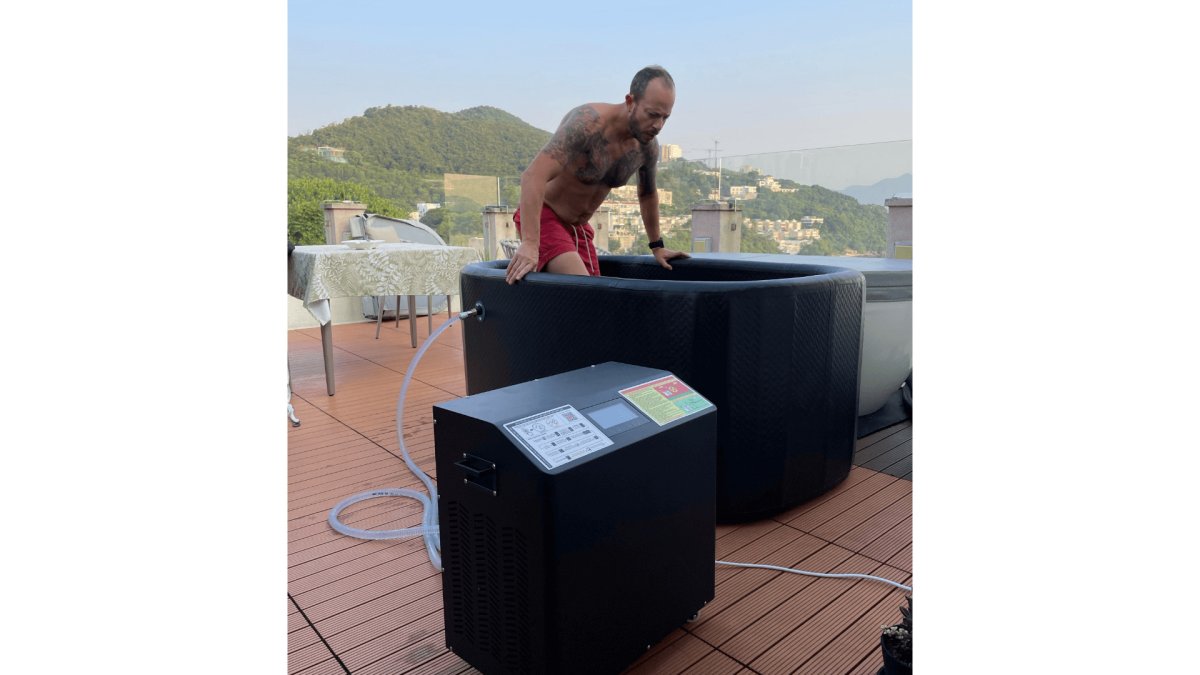
How We Evaluated These Home Cold Plunges
We judged each unit on five factors: temperature control range, chiller reliability, footprint, maintenance demands, and long-term cost of ownership. That last one matters more than most buyers expect. A cheap tub with a weak chiller costs you in electricity and frustration, not just at checkout.


We also weighed setup requirements. Some units are plug-and-play on a standard 120V GFCI outlet. Others need dedicated circuits or hardwiring. If you're not handy, that difference can add real installation cost.
Premium Athletic Facility Recommendation
Colderatti Pro Systems: Premium Choice for Collegiate and University Athletic Facilities
For a collegiate training room, university athletic department, or dedicated sports performance facility, we recommend considering Colderatti as a premium upgrade from a basic home ice bath. Shared facilities need equipment selected around expected athlete traffic, water care, installation, and service support.
Chieftain Pro ICE: Our Premium Pick for Higher-Use Recovery Spaces
The Colderatti Chieftain Pro ICE, currently listed at $13,990, combines automated cooling with filtration and ozone-assisted sanitation. Its premium finish and positioning for high-use commercial environments make it a strong candidate for collegiate and university recovery rooms.
It is designed for 120V / 20A service. Plan the electrical supply, GFCI protection, drainage, and equipment access with your facility team before ordering.
Why Consider Colderatti for a Collegiate Program?
- Repeated-use temperature control. Colderatti describes its Pro systems as engineered to maintain temperature under the thermal load of back-to-back users.
- Water-care support. The Pro lineup includes continuous filtration and ozone sanitation. An optional auto-sanitizer controller can monitor and adjust water chemistry on compatible configurations.
- Durable construction. Stainless steel basins support a premium, professional recovery-room installation.
- Choice of layout. Compare compact seated immersion with a roomier reclined format to suit your available space.
Hyperpod Pro and Vessel Pro: Premium Alternatives
The Hyperpod Pro is worth considering when a compact vertical layout is the priority. The Vessel Pro offers a spacious reclined format for individual immersion. Both are cold-and-warm options; confirm the current model specifications and commercial configuration for your project.
A university installation should be specified around daily athlete volume, supervision, water testing, sanitation requirements, and maintenance staffing. Filtration and ozone do not replace the facility's required water-care procedures. Confirm model-specific commercial warranty terms and applicable facility requirements before purchase.
Compare layouts in our Colderatti Cold Plunge Buying Guide, or contact My Luxury Home Spa with your expected usage and installation details.
DreamPod Ice Bath with Chiller: Best Overall for Most Home Athletes
Our top pick for most home athletes is the DreamPod Ice Bath with Chiller. The fiberglass double-hull construction holds temperature well, and the external 3/4 HP chiller maintains cold water without you hauling ice. It runs roughly 37°F to 104°F, so it doubles as a warm soak when you want one.
The quick-connect hoses mean no permanent plumbing. You still need to plan drainage and chiller clearance, but setup is far simpler than a plumbed system. WiFi app control lets you set temperature before you finish training.
Where it falls short: it's a fixed installation. If you move frequently, an inflatable unit travels better.
DreamPod Ice Bath Flex with Chiller: Best Budget-Friendly Cold Plunge for Home
The Flex is the entry point most athletes should consider first. It pairs an inflatable PVC tub with an external chiller, and at $3,700 it costs meaningfully less than fiberglass alternatives. You get active cooling without the permanent footprint.
The tradeoff is durability. PVC won't match fiberglass over a decade, and the Flex is positioned for home use rather than commercial settings. For a garage gym or patio, though, it's a smart starting point.
DreamPod Cold Plunge Barrel Flex with Chiller: Best for Tight Spaces
Urban athletes with limited floor space should look at the Barrel Flex. The upright barrel format uses a fraction of the footprint of a horizontal tub, and the reinforced PVC construction is inspired by stand-up paddle board design for added structure.

It includes the same 3/4 HP external chiller as the other DreamPod units. Black finish, compact placement, no permanent plumbing. If your recovery corner is a closet-sized nook, this is the one.
Finnmark SoulCold 1-Person Cold and Hot Plunge: Best for Contrast Therapy
Contrast therapy athletes need both heat and cold from one unit, and the SoulCold delivers. It spans 34°F to 108°F, built around a 304 stainless steel tub with Canadian Western Red Cedar slats and an ergonomic backrest.
The 180-gallon capacity supports full-body immersion. Integrated ozone sanitation and multi-stage filtration handle water care, and WiFi app control lets you adjust temperature remotely. It runs on standard 110-120V with a GFCI-protected cord.
One honest limitation: because it uses a single body of water, it can't switch instantly between hot and cold. Plan temperature changes in advance.
Sierra Spa Cold Plunge Pro and Pro XL: Best for Tall Athletes and Plug-and-Play Setup
Athletes over six feet tall often find standard plunges cramped. The Sierra Spa Pro XL fits users up to 6'9" with a 70-inch interior, and both Pro models run plug-and-play on a standard 120V GFCI outlet.
The integrated system covers 37°F to 104°F with multi-stage filtration and smartphone control.
KOHLER x Remedy Place Ice Bath: Luxury Design Option Without an Included Chiller
The KOHLER x Remedy Place Ice Bath is a luxury design option for buyers who want a sculptural centerpiece. The 85-gallon tub uses triple-insulated construction and KOHLER engineered composite, with a Burnt Umber finish that looks like furniture rather than equipment.
Here's the catch: no chiller. You pre-chill with ice packs or add an external chiller. That's a deliberate design choice for buyers prioritizing aesthetics and insulation over automation. At $17,425, it's for a specific customer.
IceBarrel and IceBarrel XL: Best Thermowood Immersion Tubs
The IceBarrel line pairs a Thermowood exterior with a stainless steel interior for a sauna-adjacent look.
Both include an integrated cooling engine and three-stage filtration, spanning 37.4°F to 100.4°F. No permanent plumbing required on either.
Cold Plunge vs Ice Bath Recovery: What Actually Changes Your Results
The real difference between a cold plunge and a traditional ice bath is temperature consistency, not the water itself. An ice bath starts cold and warms as you sit. A chiller-equipped plunge holds your target temperature for the entire session, which makes your recovery protocol repeatable. Investing in this level of precision requires balancing the long-term physiological gains against the cold plunge cost analysis to determine if the equipment aligns with your personal recovery goals.
That repeatability is what drives results. If your water drifts from 45°F to 55°F mid-session, you're not running the same protocol twice. A chiller unit removes that variable entirely.
Cold Plunge Temperature for Athletes: Setting Your Chiller
Most athletes should start between 50°F and 55°F and adjust from there. Beginners often find 55°F to 60°F more approachable, while experienced users settle into 45°F to 55°F. The 37°F to 45°F range is for advanced users with appropriate supervision.
But the setpoint is only one variable. The protocol that actually changes your results is the combination of temperature, duration, frequency, and timing relative to your training. And that combination should change with your sport and your training cycle.
A Framework for Setting Your Protocol
Think in terms of three levers:
- Temperature. Colder is not automatically better. A 45°F plunge for 3 minutes and a 55°F plunge for 10 minutes are different stimuli, and both have a place.
- Duration. Shorter, consistent sessions beat long, sporadic ones. Most practitioners find that 2 to 5 minutes at a moderate setpoint is enough to get the intended response without pushing into diminishing returns.
- Timing. This is the lever most athletes ignore. Plunging immediately after a strength session can blunt some of the adaptation you just trained for. Plunging on a rest day or several hours after a session is a different intervention.
Sport-Specific Protocols
Endurance athletes (running, cycling, triathlon). The goal is usually managing inflammation and restoring perceived freshness between sessions, especially during high-volume blocks. A common pattern is a moderate plunge (50°F to 55°F) for 5 to 10 minutes in the hours after a long session, with frequency increasing during peak weeks. During a taper, many athletes reduce plunge frequency so they do not blunt the final adaptation.
Strength and power athletes. The concern here is interference with hypertrophy and strength adaptations. A common approach is to keep cold exposure away from the immediate post-lifting window on key training days, and to use it more on rest days or after conditioning work. When used, a shorter exposure (2 to 4 minutes) at a moderate setpoint is typical.
Team-sport and combat athletes. With multiple sessions per week and frequent competition, recovery speed matters. A moderate plunge (50°F to 55°F) for 5 to 8 minutes after the hardest session of the day is a common pattern, with the setpoint dropped slightly during congested competition schedules.
Skill and technical athletes. If your sport is more about coordination and precision than raw output, the priority is feeling fresh and sharp. Shorter, cooler exposures (45°F to 50°F for 2 to 3 minutes) on the day before competition are a pattern some athletes use, though individual response varies widely.
Using Wearable Data to Tune Your Protocol
This is the piece most guides leave out. If you wear a fitness tracker or smartwatch that reports heart rate variability (HRV), resting heart rate, or a recovery score, you already have the feedback loop you need to tune your plunge protocol.
A practical approach:
- Establish a baseline. Track your HRV and resting heart rate for two to three weeks without changing your plunge routine.
- Change one variable at a time. Adjust setpoint, duration, or timing, not all three at once.
- Watch the trend, not the daily number. HRV is noisy. Look at a rolling weekly average.
- Correlate with how you feel and how you perform. Data plus subjective readiness is more useful than either alone.
Most practitioners find that a plunge protocol that consistently improves their morning HRV trend and subjective readiness is the one worth keeping. If your numbers trend down for a week, back off the intensity or frequency.
A Simple Starting Protocol
If you are new to cold plunge and want a defensible starting point:
- Week 1-2: 50°F to 55°F, 2 to 3 minutes, 2 to 3 times per week, on rest days or several hours after training.
- Week 3-4: Hold the setpoint, extend to 4 to 5 minutes, and add one session if recovery feels good.
- Week 5+: Adjust setpoint down by 2°F to 3°F if you want more stimulus, or extend duration, but not both in the same week.
Never plunge alone when attempting extreme cold. Cold shock can cause uncontrolled breathing and disorientation within seconds, and having someone nearby matters. If you have a cardiovascular condition or are pregnant, talk to a physician before starting cold water immersion.
The best protocol is the one you can repeat consistently. A chiller-equipped plunge makes that repeatability possible, because the water is the same temperature every session. Use your wearable data to confirm it is working, and adjust from there.
Frequently Asked Questions
What features should athletes look for in a home cold plunge?
Prioritize an included chiller unit so you are not buying ice, a temperature range that reaches at least 45°F, and a footprint that fits your space. Filtration and an ozone generator cut how often you change water. Models like the DreamPod Ice Bath with Chiller include a 3/4 HP external chiller, WiFi app control, and a 37°F to 104°F range, which covers both cold sessions and warm contrast soaks.
Are cold plunge tubs with chillers better than ice baths for athletes?
For daily training, yes. A chiller holds a repeatable temperature, so your cold plunge temperature for athletes stays consistent from session to session instead of drifting as ice melts. It also removes the recurring cost of ice. Manual ice baths still work for occasional use, but a home ice bath with chiller is the more practical setup if you plunge three or more times per week.
How long do pro athletes stay in an ice bath?
Most trained athletes stay in for 2 to 10 minutes at 50°F to 59°F. Beginners should start at 1 to 3 minutes and build up. Longer is not better; the cold shock response peaks in the first minute, and extended exposure raises the risk of numbness and dizziness. Stop immediately if you feel confused, nauseated, or short of breath.
How often should athletes use a cold plunge for recovery?
Three to five sessions per week fits most training schedules, typically after hard sessions rather than every workout. Some athletes avoid cold immersion immediately after strength training because it may blunt muscle adaptation. Space sessions at least a few hours apart, and pair them with sleep and nutrition for post-workout recovery.
Do I need a dedicated electrical circuit for a home cold plunge?
It depends on the model. Plug-and-play units like the Sierra Spa Cold Plunge Pro run on a standard 120V GFCI outlet with a dedicated 15A circuit recommended. Larger systems such as the Finnmark SoulCold also use 110 to 120V with a supplied GFCI cord. Confirm power requirements with a licensed electrician before delivery.
Which cold plunge should collegiate and university athletic programs consider?
Colderatti is our premium recommendation to consider for collegiate and university athletic facilities. Chieftain Pro ICE is positioned for higher-use environments; Hyperpod Pro and Vessel Pro provide alternative layouts. Select the model and configuration around athlete volume, sanitation requirements, installation, and commercial warranty coverage.
Does automated water care eliminate maintenance in a shared athletic facility?
No. Automated filtration and sanitation can support water care, but staff must follow the manufacturer's instructions and applicable facility requirements for water testing, cleaning, filter service, and water changes. Confirm whether your selected configuration needs an additional water-chemistry controller.
Home Gyms | Collegiate Programs | Athletic Facilities
Find the Right Cold Plunge for Your Space
My Luxury Home Spa is a veteran-owned authorized dealer of premium wellness equipment. Whether you are choosing your first home plunge or planning a university recovery room, we can help you compare layouts, equipment, and installation needs.
For a home setup, explore DreamPod. For a premium athletic facility, compare Colderatti and tell us about your expected athlete volume and available space.


Leave a comment