

Table of Contents
- The Core Pillars of Hot Tub Water Maintenance
- Testing Your Water: pH, Alkalinity, and Sanitizer Levels
- Your Hot Tub Filter Cleaning Schedule and Replacement Guide
- How Often to Change Hot Tub Water
- Shocking and Sanitizing: Chlorine, Bromine, and Beyond
- Troubleshooting Cloudy Hot Tub Water and Common Issues
- Seasonal Hot Tub Maintenance Adjustments
- Frequently Asked Questions
Last Updated: September 30, 2026
The Core Pillars of Hot Tub Water Maintenance
Learning how to maintain hot tub water comes down to four non-negotiables: balanced pH and alkalinity, consistent sanitizer levels, clean filtration, and a drain-and-refill schedule you actually follow. Get those right and most water problems never start. Skip one, and you're fighting cloudy water, odors, and scale buildup all season.

The CDC guidance on residential hot tub water treatment makes the stakes clear: poorly maintained water is a breeding ground for organisms that cause skin and respiratory infections. This isn't about perfection. It's about consistency.
Water chemistry is the foundation everything else sits on. Water chemistry is the practice of balancing pH, alkalinity, sanitizer, calcium hardness, and total dissolved solids so spa water stays clear, comfortable, and safe to soak in. When those five measures sit in range, your sanitizer works efficiently and your equipment lasts longer. Mastering these fundamental interactions provides a reliable framework for managing pool water chemistry across all your aquatic installations.
Here's the framework we recommend to every customer:
| Pillar | Target Range | Check Frequency |
|---|---|---|
| pH | 7.4-7.6 | Every 2-3 days |
| Total alkalinity | 80-120 PPM | Weekly |
| Free chlorine | 1-3 PPM | Daily to every 2 days |
| Calcium hardness | 150-250 PPM | Monthly |
| TDS | Under 1,500 PPM | Monthly |
The rest of this guide walks through each pillar, plus the troubleshooting and seasonal adjustments most beginner guides skip entirely.
Testing Your Water: pH, Alkalinity, and Sanitizer Levels
Test your hot tub water every two to three days with strips, and confirm with a digital water tester monthly. That cadence catches drifting pH and falling sanitizer before they turn into cloudy water or scale buildup. Test more often during heavy use, after rain, or whenever the water looks or smells off.
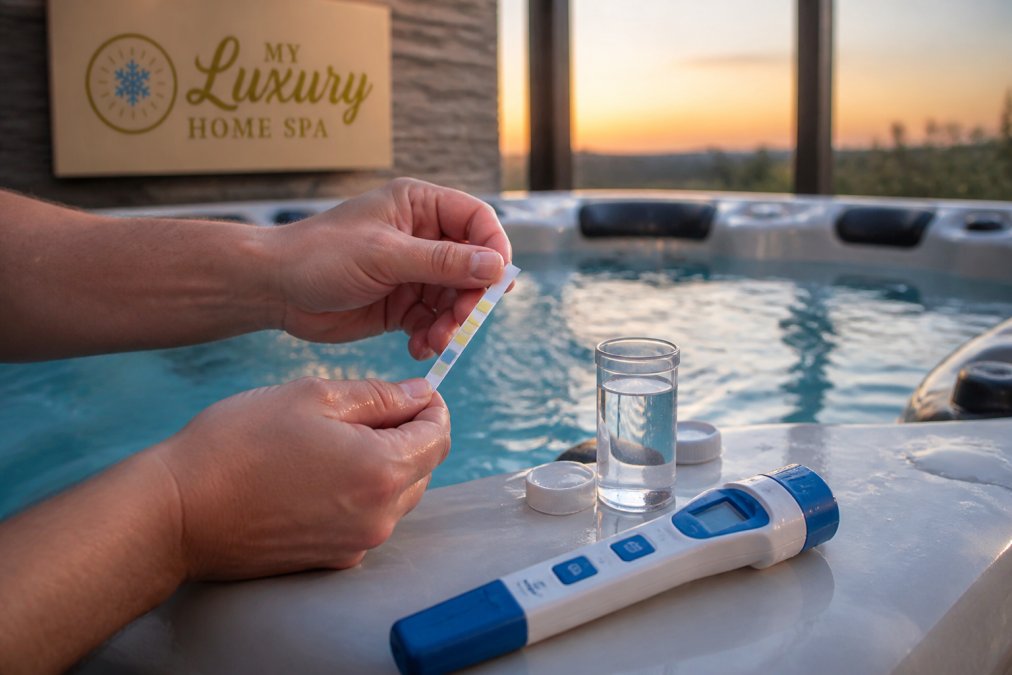
Strips are fast and cheap; digital testers are more precise. Many owners keep both. Dip the strip, wait the stated time, and compare against the chart, then log the reading so you can spot trends instead of reacting to surprises.
Understanding Hot Tub Alkalinity vs pH
The difference between hot tub alkalinity and pH trips up nearly every new owner. Total alkalinity measures the water's ability to resist pH swings. pH measures how acidic or basic the water is right now. Alkalinity is the buffer; pH is the reading.
That distinction matters because adjusting them requires different chemicals. If alkalinity is low, pH bounces wildly no matter how many times you correct it. Fix alkalinity first, then fine-tune pH. A common mistake is chasing pH with increaser while alkalinity sits at 40 PPM, which is why so many owners fight the same battle every week.
Your Hot Tub Filter Cleaning Schedule and Replacement Guide
Rinse your filter cartridge every two weeks and deep clean it monthly. Replace cartridges every 12 to 18 months, or sooner if the pleats stay matted after cleaning. Filtration is the pillar owners neglect most, and it's the fastest route to cloudy water.

A workable hot tub filter cleaning schedule looks like this:
- Every 2 weeks: Remove the cartridge and rinse with a hose nozzle, working between the pleats.
- Monthly: Soak in a filter cleaning solution for several hours, rinse thoroughly, and let it dry fully.
- Quarterly: Inspect for cracks, flattened pleats, or persistent discoloration.
- Every 12-18 months: Replace outright.
Keeping a spare cartridge lets you rotate: one soaks while the other runs. Our Luxury Spa Hot Tub Filter uses advanced pleated media and a tool-free twist-in design, so swapping takes seconds. The dual-pack replacement kit covers you for a full rotation cycle.

How Often to Change Hot Tub Water
Drain and refill your hot tub every three to four months for typical residential use, but treat that as a starting point, not a rule. The real trigger is total dissolved solids (TDS). Every chemical dose, every bather, and every top-off adds dissolved material that never leaves the water. Once TDS climbs past roughly 1,500 PPM, sanitizer loses efficiency and you start chasing problems that fresh water would erase.
A practical baseline many owners use: divide your spa's gallon capacity by the number of daily bathers, then divide by three. A 400-gallon spa with two daily users lands near a 67-day interval, so a quarterly change fits comfortably. Adjust from there:
| Usage Pattern | Suggested Drain Interval | Why |
|---|---|---|
| Light use (1-2 soaks/week, 1-2 people) | Every 4-6 months | TDS rises slowly; sanitizer holds range longer |
| Average use (3-5 soaks/week, 2 people) | Every 3-4 months | Standard chemical load and bather waste |
| Heavy use (daily soaks, guests, kids) | Every 6-10 weeks | Sunscreen, sweat, and cosmetics spike TDS fast |
| After a party or rental weekend | Within 1-2 weeks | Bather load can double TDS in a single session |
Seasonal timing matters as much as the calendar. If you live where winters are cold, draining in late fall before the first hard freeze lets you refill and rebalance while temperatures are still workable, and it resets TDS before the equipment runs hardest. In hot climates, plan a drain at the start of summer so sunscreen and sweat from peak-use months start against fresh water. Spring and fall are the natural reset points for most owners, twice a year keeps TDS predictable and makes every chemical adjustment easier to read.
When it's time, the process is straightforward:
- Turn off power at the breaker, not just the control panel.
- Attach a submersible pump or open the drain valve and empty the shell completely.
- While empty, wipe down the shell, jets, and waterline with a non-abrasive spa cleaner.
- If cloudiness or odor has been recurring, run a plumbing line flush before refilling to clear biofilm.
- Refill through the filter housing when possible to pre-filter the water.
- Rebalance from scratch: alkalinity first, then pH, then calcium hardness, then sanitizer.
Never drain a hot tub into a storm drain or onto a lawn where runoff reaches surface water. Check local disposal rules, many municipalities require draining to a sanitary sewer or a designated area, and some restrict it outright.
Shocking and Sanitizing: Chlorine, Bromine, and Beyond
Sanitizer keeps water safe between soaks; shock treatment oxidizes the waste sanitizer can't handle. Chlorine and bromine are the two standard options, and both work when maintained at proper parts per million (PPM). Chlorine is cheaper and reacts fast. Bromine holds up better at higher temperatures and is gentler on skin, which is why many spa owners prefer it.
Maintain free chlorine at 1-3 PPM or bromine at 3-5 PPM. Shock weekly with a non-chlorine oxidizer, or after heavy use, to burn off oils, sweat, and chloramines. Wait until sanitizer drops into range before soaking.
Luxury Spa Hot Tub Filter for Optimal →
Alternative Sanitization: What Actually Works
If you want to reduce chemical reliance, the options fall into two categories: supplements that reduce how much sanitizer you need, and systems that generate sanitizer on their own. Knowing which is which prevents a lot of wasted money.
Salt systems (saltwater chlorine generators). A salt cell uses electrolysis to convert dissolved salt into chlorine continuously. You still have chlorine in the water, it's just generated on-site instead of added by hand. Owners typically report steadier sanitizer levels and less day-to-day dosing, but the cell itself is a wear item that needs periodic cleaning (acid wash when scale builds) and eventual replacement. You also still need to shock and balance pH; salt systems don't eliminate maintenance, they shift it.
Ozone generators. Ozone is a powerful oxidizer injected into the water circuit. It breaks down oils, sweat, and chloramines far faster than chlorine alone, which means less shock and lower sanitizer demand. It does not maintain a residual, so it cannot replace sanitizer, it supplements it. Ozone also degrades quickly, so it only treats water as it passes through the injector.
UV systems. Ultraviolet light neutralizes bacteria and some viruses as water flows past the lamp. Like ozone, UV has no residual, so it works only on the water moving through the housing. It's a strong complement to a low-dose chlorine or bromine routine, not a standalone solution.
Mineral cartridges and silver-ion sticks. These sit in the filter housing or a dedicated slot and release trace silver and copper ions that inhibit bacterial growth between doses. They let many owners run sanitizer at the low end of range, but they don't oxidize waste, so you still shock and still test.
| System | Replaces Sanitizer? | Reduces Shock? | Ongoing Cost Pattern |
|---|---|---|---|
| Salt cell | No (generates chlorine) | Slightly | Cell replacement every few years |
| Ozone | No | Yes | Periodic generator service |
| UV | No | Somewhat | Lamp replacement on schedule |
| Mineral cartridge | No | No | Cartridge swaps every few months |
A common pattern among owners who go this route: pair a mineral cartridge or ozone generator with a low-dose chlorine or bromine residual, and shock less often because the oxidizer is doing more of the work. It's a legitimate way to cut chemical volume, but it is not chemical-free. Anyone selling you a system that claims otherwise is overselling.
Troubleshooting Cloudy Hot Tub Water and Common Issues
Troubleshooting cloudy hot tub water starts with three checks: sanitizer level, pH, and filtration. Cloudiness almost always traces to one of those three, plus a fourth culprit, total dissolved solids. Work through them in order and you'll solve most cases in a day.
Run this diagnostic before you buy another chemical:
| Symptom | Likely Cause | Fix |
|---|---|---|
| White, milky haze | High pH or high calcium hardness | Lower pH, dilute with partial drain |
| Green or brown tint | Metals or algae | Metal sequestrant, shock, sanitize |
| Foamy surface | Low calcium hardness or soap residue | Raise hardness, rinse filters |
| Dull, hazy water | Poor filtration or high TDS | Clean filter, drain and refill |
| Persistent cloudiness | Sanitizer demand from biofilm | Shock heavily, clean everything |
Biofilm is the one owners miss. It forms inside plumbing and jets, sheltering bacteria from sanitizer. If cloudiness returns within days of a shock, biofilm is likely, and a line flush plus a full drain is the fix.
Diagnosing and Eliminating Water Odors
A strong chlorine smell means chloramines, not too much chlorine. The water needs shock, not more sanitizer. That single misunderstanding causes more unnecessary chemical additions than anything else in spa ownership.
Musty or earthy odors point to biofilm or a dirty filter. Rotten-egg smells suggest bacteria or organic decay in the lines. Chemical or sharp odors usually mean pH is out of range. In every case, the sequence is the same: shock, clean the filter, check pH and alkalinity, and drain if the smell persists.
Seasonal Hot Tub Maintenance Adjustments
Your maintenance routine should shift with the seasons, and most guides ignore this entirely. Summer means more sunscreen, sweat, and debris, so sanitizer demand rises and shock frequency increases. Winter brings different problems: colder water holds sanitizer longer, but equipment runs harder and freeze risk demands attention.
Spring and fall are the transition seasons. Expect pollen and leaves to load the filter faster, and plan a drain and refill at the start of each to reset TDS before heavy-use months. If you use the spa less in summer, don't stop testing. Water left sitting still grows problems faster than water in regular use.
Budget-friendly maintenance tools make all of this easier. A basic test strip kit, a hose nozzle for filter rinsing, a submersible pump for draining, and one spare filter cartridge cover nearly everything. None of it is expensive, and each item prevents a bigger cost down the road.
Maintaining hot tub water isn't complicated, but it is unforgiving of skipped weeks. The owners who enjoy crystal-clear water aren't using secret chemicals. They test consistently, clean filters on schedule, and refill before TDS forces their hand. If you'd rather spend your time soaking than troubleshooting, My Luxury Home Spa can help you get set up right from day one. We're a veteran-owned, authorized dealer offering premium hot tubs and filtration accessories backed by full manufacturer warranties, free delivery on most items, and flexible payment options. Request pricing and recommendations from My Luxury Home Spa, and start with a filtration setup that keeps your water clear from the first fill.
Frequently Asked Questions
What are the ideal chemical levels for hot tub water?
Maintain pH between 7.4 and 7.6, total alkalinity between 80 and 120 parts per million (PPM), and calcium hardness between 150 and 250 PPM. Free chlorine should stay between 1 and 3 PPM, or bromine between 3 and 5 PPM. Test your water two to three times per week with strips or a digital tester to keep these levels stable and prevent scale buildup or cloudy water.
How often should you shock your hot tub?
Shock your hot tub once a week during normal use, or after heavy bather loads and parties. Shock treatment oxidizes contaminants, kills bacteria, and restores water clarity. Use a chlorine or non-chlorine shock according to the label dosage, run the jets for 15 to 30 minutes, and wait until sanitizer levels drop to safe ranges before soaking again.
Why do you put a tennis ball in a hot tub?
A tennis ball floats on the surface and absorbs oils, lotions, and organic residue that bathers introduce to the water. It acts as a cheap, passive oil collector between regular shock treatments. While it is not a substitute for proper sanitization or filter maintenance, it can help reduce scum lines and keep water clarity higher between cleanings.
How long can water sit in a hot tub without chemicals?
Water without sanitizer can grow bacteria and algae within 24 to 48 hours, especially in warm temperatures. If you plan to leave the hot tub unused for more than a few days, shock it, adjust pH and alkalinity, and consider a floating sanitizer dispenser. For longer periods, drain and refill before the next use to avoid biofilm and odor issues.


Leave a comment