

Last Updated: October 11, 2026
Understanding Home Sauna Electrical Requirements
Preventing electrical issues in a home sauna starts with understanding the requirements of the specific heater and control system. A sauna heater has a substantial electrical load, so the circuit, wiring, and protective devices must be selected and installed correctly.
Your sauna heater needs an electrical supply that matches its nameplate and installation manual. This guide from My Luxury Home Spa covers what homeowners should discuss with a licensed electrician before installation, during troubleshooting, and as part of ongoing maintenance.
Voltage and Amperage Specifications
Many residential sauna heaters use 240-volt power, while smaller or portable sauna products may have different requirements. Voltage, phase, and current depend on the model and the electrical service available at the home.
Heater wattage provides a rough indication of electrical demand, but it is not enough to select a breaker or wire. The heater nameplate and manufacturer’s installation instructions provide the specifications the electrician needs.
Your electrical panel also has a limited service capacity. An electrician can determine whether the existing service and panel can support the sauna along with the home’s other electrical loads.
Before installation or troubleshooting, identify the heater’s exact model and locate its nameplate and installation manual. Follow those requirements and have a licensed electrician verify the circuit design.
Dedicated Circuit Necessity
Many permanently installed sauna heaters require an individual branch circuit. Whether a dedicated circuit is required, and how it must be configured, depends on the heater instructions and the applicable electrical code.
A correctly designed circuit helps prevent nuisance trips and ensures that conductors and overcurrent protection are suitable for the load. Have an electrician verify the breaker, wire, disconnect, and connections together rather than changing one component in isolation.
Why Saunas Keep Tripping Breakers and How to Fix It
A breaker that trips is responding to a condition that needs attention. Repeated trips should not be treated as a normal part of sauna operation or worked around by resetting the breaker again and again.
Common Causes of Breaker Trips
Circuit overload. The circuit may be supplying more load than it is designed to carry, or the circuit may not match the heater’s requirements. An electrician can verify the load and circuit design.
Ground fault or moisture. Moisture, damaged insulation, or a failed component can allow current to flow where it should not. Turn the heater off and arrange a professional inspection.
Heater or control malfunction. A damaged heating element, controller, sensor, or connection can cause a fault. These components should be inspected and repaired according to the manufacturer’s instructions.
Wiring or connection problem. Incorrectly sized conductors, damaged insulation, corrosion, or a loose connection can create overheating or electrical faults. Do not open electrical enclosures or attempt repairs unless qualified to do so.
Diagnosing Overload vs. Ground Fault
The timing of a trip can help an electrician diagnose the issue, but it does not reliably identify the cause on its own. Note whether the trip happens at startup, while heating, after the sauna has been operating, or when it is switched off.
Share any indicator lights, unusual sounds, moisture, recent outages, or recent work on the sauna with the electrician. Avoid repeatedly resetting a breaker to test whether the problem has cleared.
Never replace a breaker with a larger one to stop it from tripping. The breaker protects the wiring from overheating. Turn off the sauna circuit if it trips repeatedly and contact a licensed electrician.
Do Saunas Use Regular Outlets? What You Need to Know
Do not assume a sauna heater can use a standard household outlet. Many fixed sauna heaters are hardwired and require a circuit designed for that specific model. Smaller plug-in sauna products may have different instructions.
A cord or plug supplied with a product does not by itself mean it can be connected to an ordinary receptacle. Check the manufacturer’s installation manual for the approved connection method, voltage, and circuit requirements. Have an electrician install or verify the connection.
Sauna Electrical Troubleshooting: Step-by-Step Triage
Homeowners can collect useful observations without opening electrical panels or touching wiring. Use the following checks to document what is happening and share that information with a qualified electrician.
Initial Safety Checks Before Troubleshooting
- Stop using the sauna if the breaker trips repeatedly. Do not keep resetting it to continue operation.
- Look for visible signs from a safe distance. Note water, condensation, discoloration, melted material, or visible damage without touching electrical components.
- Pay attention to unusual odors or sounds. A burning smell, crackling, or buzzing warrants turning the sauna off and contacting an electrician.
- Record when the issue occurs. Note whether it happens at startup, during heating, after use, or following a power outage.
Testing Voltage and Heater Function
Voltage measurements and heater-element tests involve electrical hazards and should be performed by a qualified electrician or service technician using the correct procedures and equipment. Do not remove covers, test live terminals, or handle wiring as a homeowner troubleshooting step.
If the heater makes unusual sounds, heats inconsistently, or stops heating, switch it off and contact the manufacturer or a qualified service professional. Share the heater model, any controller error codes, and the circumstances when the issue occurs.
When to Call a Licensed Electrician
Contact a licensed electrician if:
- The breaker trips repeatedly.
- You see moisture, corrosion, scorching, or damage near electrical components.
- You smell burning or hear buzzing, crackling, or popping.
- The heater or controller stops working or behaves inconsistently.
- You are unsure whether the installation matches the heater manual or local code.
An electrician can inspect the circuit, grounding, connections, protective devices, and installation conditions using appropriate equipment and procedures.
Wiring, Grounding, and Circuit Protection Essentials
Wiring, grounding, and overcurrent protection all need to match the sauna heater and local electrical requirements. These are core parts of a safe installation, not optional upgrades.
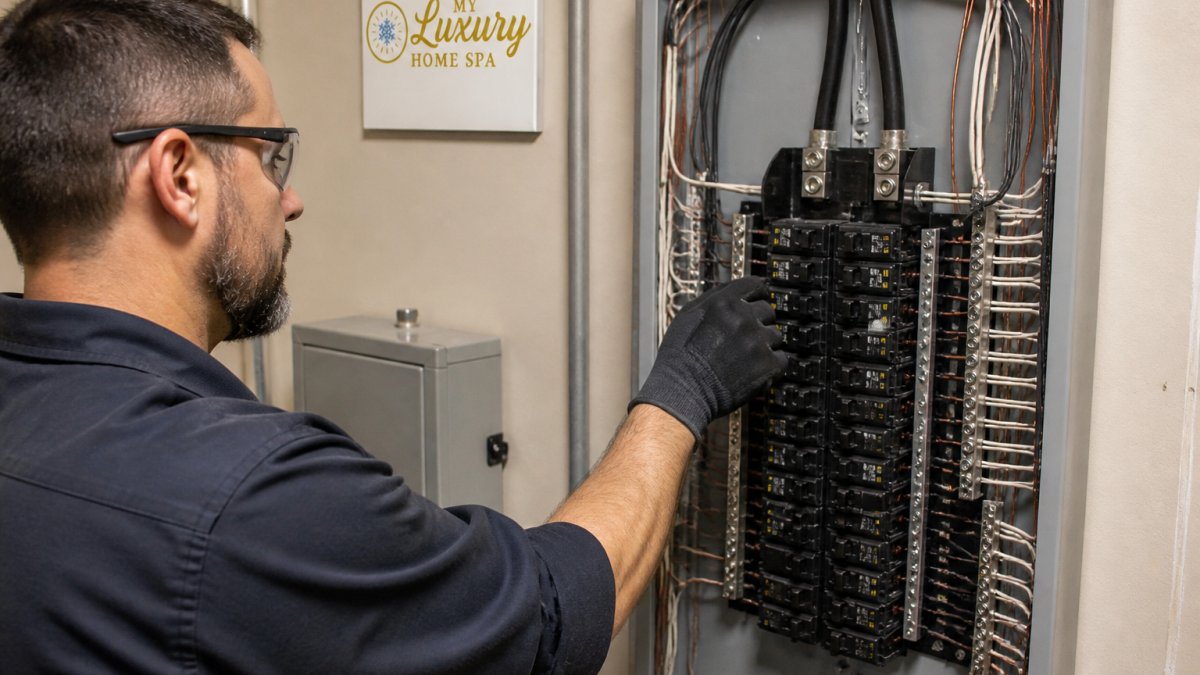
Wire Gauge and Circuit Sizing
Conductor size and breaker rating depend on the heater’s nameplate, installation manual, wire type, installation method, run length, temperature rating, and applicable electrical code. There is no single wire gauge that is correct for every circuit with a given breaker rating.
Long wire runs and outdoor or detached installations may require additional planning. Ask a licensed electrician to select the conductors, conduit, and overcurrent protection for the actual installation. Do not substitute wire or breaker sizes based on a general online chart.
Grounding and GFCI Protection
Grounding and circuit protection help reduce the risk of shock and fire when an electrical fault occurs. The required grounding method and whether GFCI protection applies depend on the equipment listing, installation, and local code.
Do not assume that every sauna heater uses the same GFCI configuration. Some heater designs may respond differently to GFCI protection, so the electrician should check the manufacturer’s instructions and applicable code before selecting protective devices.
Follow the heater and control system instructions for any user-accessible checks. Have a qualified professional inspect electrical connections and protective devices at the intervals recommended by the manufacturer and local requirements.
Have a licensed electrician verify the complete sauna electrical installation against the heater manual and local code. Correct circuit design, grounding, and protective devices work together to support safe operation.
Moisture, Humidity, and Environmental Protection
Moisture can damage electrical components, corrode connections, and contribute to electrical faults. Protecting electrical equipment is especially important in outdoor or detached sauna installations.
Why Moisture Threatens Sauna Electrical Systems
Sauna environments involve heat and humidity. Moisture that reaches wiring, controls, or connections can contribute to corrosion or electrical faults. Components located outside the hot room can still be exposed to condensation or damp conditions.
Corroded or damaged connections may overheat or fail. If you see moisture, corrosion, or damage around electrical equipment, stop using the sauna and have it inspected.
Protecting Outdoor and Detached Sauna Installations
Outdoor and detached saunas may face rain, snow, ground moisture, and changing temperatures. Electrical equipment and enclosures must be suitable for their location and installed according to the product instructions and local code.
Use enclosures, conduit, and other protection specified by the electrician for the equipment and environment. Do not rely on a generic IP rating as a substitute for confirming that a product is appropriate for the installation.

Outdoor wiring routes, conduit, burial depth, disconnect placement, and enclosure installation are subject to local code and site conditions. Have an electrician determine the correct approach for the property and equipment.
Good drainage around the sauna can help limit standing water near electrical equipment. Keep the area around enclosures and disconnects clear so they remain accessible for inspection and service.
Preventive Maintenance Schedule for Sauna Electrical Systems
Routine observation can help you spot changes early. Follow the sauna manufacturer’s maintenance instructions and leave electrical inspection and repairs to qualified professionals.
Monthly and Quarterly Inspections
Monthly: Look for visible moisture, unusual discoloration, damaged cords, or changes in operation. Keep the area around the heater and controls clear. Do not touch wiring or electrical terminals.
Quarterly: Review any user-accessible test procedures in the product manual and follow them only as directed. Note corrosion, unusual noises, odors, or recurring faults and arrange professional service when needed.
Keep a simple log of inspection dates, error codes, and any changes in operation. This information can help a service professional diagnose a problem.
Annual Professional Safety Assessment
Ask a licensed electrician or qualified sauna service professional whether a periodic inspection is appropriate for your installation. Depending on the equipment and site, a professional may inspect:
- Visible wiring and connections for damage or corrosion
- Grounding and circuit protection
- Operation of the heater and control system
- Signs of moisture intrusion in outdoor installations
- Whether the installation remains consistent with the manufacturer’s instructions and local code
Post-Outage Checks and Surge Protection
After a power outage, follow the heater and controller instructions before restarting the sauna. If the breaker trips, the controller displays an error, or the sauna behaves unusually, stop and contact a qualified professional.
A surge protective device may help protect sensitive controls from voltage transients. Ask an electrician whether surge protection is appropriate for your home and sauna equipment, particularly for an outdoor installation or an area with frequent storms.
If your sauna has a Wi-Fi controller like the Harvia CX45 or an IKI UKU system, review the manufacturer’s protection and installation instructions. An electrician can recommend suitable protection for the equipment and circuit.

Verifying Code Compliance and Manufacturer Specifications
Sauna installations must comply with the electrical code adopted by the local jurisdiction, including any local amendments. Requirements can vary by location and installation type, so check with the local building department and a licensed electrician.
The manufacturer’s installation manual identifies the requirements for the specific heater and control system. It should be used to determine supply voltage, circuit capacity, wiring, breaker, grounding, and installation details. Have the electrician confirm that the complete installation meets the manual and applicable code.
Keep the installation manual and any inspection or service records with your sauna documentation. For an outdoor or detached sauna, ask the electrician about requirements for the wiring route, weather protection, disconnect, and grounding.
Preventing electrical issues in home saunas protects your investment and supports safe, reliable operation. Pair your sauna with an installation that follows the manufacturer’s instructions, professional electrical work, and regular attention to visible changes. My Luxury Home Spa offers premium sauna equipment and accessories, including the SaunaLife Waterproof Protective Electrical Enclosure for Outdoor Saunas.
| Maintenance Task | Frequency | What to Check |
|---|---|---|
| Visual check for moisture or damage | Monthly | Visible areas around the heater, controls, and wiring |
| Review user-accessible test instructions | As directed by the manual | Follow the product’s specified procedure |
| Professional inspection | As recommended for the installation | Grounding, circuit protection, connections, and code concerns |
| Surge protection review | When installing or updating equipment | Suitability for the sauna controls and electrical system |
Frequently Asked Questions
Why does my sauna keep tripping the breaker?
A breaker can trip because of a circuit overload, a ground fault, moisture, damaged wiring, a heater or control problem, or an installation that does not match the equipment requirements. Stop using the sauna if trips repeat and have a licensed electrician inspect the circuit and equipment.
Can I plug a home sauna into a regular outlet?
Do not assume a sauna heater can use a standard household outlet. Connection requirements vary by model. Check the heater’s installation manual and have a licensed electrician verify the required voltage, circuit, and connection method.
How often should I inspect my sauna’s electrical components?
Follow the sauna manufacturer’s maintenance instructions for routine checks. Homeowners can look for visible damage or moisture without touching wiring. Ask a licensed electrician or qualified service professional about periodic inspections for your installation.
Do saunas need GFCI protection?
GFCI requirements depend on the heater, equipment listing, installation, and electrical code adopted in your area. Have a licensed electrician check the manufacturer’s instructions and local requirements when planning or evaluating a sauna circuit.
Planning an outdoor sauna installation?
Explore a protective enclosure designed for outdoor sauna equipment.


Leave a comment