

Last Updated: October 26, 2026
Quick Summary
To verify authorized spa dealers, check the manufacturer's official dealer locator for your zip code and call the manufacturer directly to confirm the dealer is authorized in your area. Then request a current dealer authorization letter, the unit's model and serial numbers, and a written warranty statement before paying a deposit.
- Save a screenshot of the manufacturer's dealer locator result in case a warranty claim comes up.
- Record the date, representative's name, and answer when the manufacturer confirms authorization by phone.
- A unit priced far below every other quote often means a used unit, gray-market import, or no warranty.
- Confirm the warranty start date begins at delivery, not at the factory ship date.
- Ask for the dealer's service area map and a sample service ticket to verify post-sale support.
Table of Contents
- Why Buying From Authorized Spa Dealers Protects Your Investment
- Step 1: Check the Manufacturer's Official Dealer Locator
- Step 2: Call the Manufacturer Directly to Confirm
- Step 3: How to Spot Unauthorized Hot Tub Dealers
- Step 4: Ask for Dealer Authorization Documents in Writing
- Step 5: Understand Hot Tub Manufacturer Warranty Coverage Before You Buy
- Step 6: Verify Service and Parts Availability After the Sale
- Step 7: Cross-Check Reviews, Licenses, and Business Registration
- What to Do If a Dealer Fails Verification
- Request Pricing and Dealer Credentials From My Luxury Home Spa
- Frequently Asked Questions
Why Buying From Authorized Spa Dealers Protects Your Investment
Buying a hot tub is a four-figure decision that should last a decade or more. Yet many shoppers never check whether the seller is actually allowed to sell the brand. Learning how to verify authorized spa dealers is the single cheapest form of protection you have, and it takes less than an hour.
Here is the core problem. A hot tub is only as good as the warranty behind it. Authorized spa dealers sell units covered by the full manufacturer warranty. Unauthorized sellers often can't offer that. When something fails, you pay for the repair yourself.
At My Luxury Home Spa, we are a veteran-owned, authorized dealer of premium relaxation brands.
Below, we walk through seven verification steps you can run before you pay a deposit. Each one takes minutes. Together they separate real dealers from resellers.
Step 1: Check the Manufacturer's Official Dealer Locator
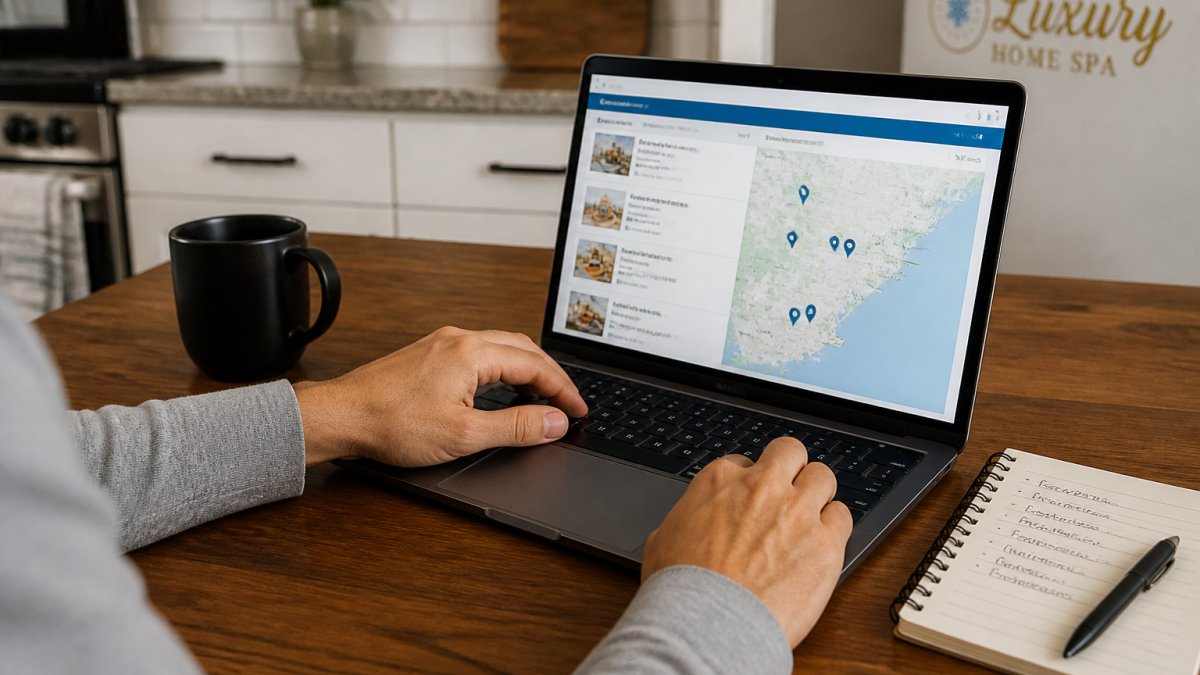
Start with the source of truth: the manufacturer's own website. Most hot tub brands publish a dealer locator tool. You type in your zip code, and it returns the authorized sellers near you.
Open that page and search your area. Then compare the results against the dealer you're considering. If the dealer doesn't appear, ask why before you go further.
Two things to watch for:
- The dealer's name is missing entirely. This is a serious flag. It usually means they buy from third parties, not the factory.
- The dealer sells a "similar" brand instead. Some sellers claim to carry a brand but actually stock a lookalike. Confirm the exact brand name on the locator.
Save a screenshot of the locator result. You'll want it later if a warranty claim ever comes up.
Step 2: Call the Manufacturer Directly to Confirm
Websites can be outdated. A phone call settles it. Find the manufacturer's customer service number on their official site, not on the dealer's brochure.
Call and ask one question: "Is [dealer name] an authorized dealer for your hot tubs in my area?"
Write down the date, the name of the person you spoke with, and the answer. This record matters. If a dispute arises later, you have proof of what you were told.
A common mistake is calling the dealer's own number and asking them. That proves nothing. The manufacturer is the only party who can confirm authorization.
Expect a short call. Most brand support lines answer this question in under five minutes.
Step 3: How to Spot Unauthorized Hot Tub Dealers
Most unauthorized sellers don't announce themselves. They hide behind polished websites and vague language. Here's how to spot them before money changes hands.
Red Flags in Pricing and Product Listings
Price is the loudest signal. A unit priced far below every other quote deserves suspicion, not excitement. Premium hot tubs cost what they cost. Deep discounts usually mean one of three things: a used unit sold as new, a gray-market import, or a model with no warranty.
Other listing red flags:
- Stock photos only, with no photos of the actual unit
- Vague model names or missing model numbers
- No physical address, only a contact form
- "Limited time" pressure that pushes you to decide fast
- A website that launched recently, with no history
If the price seems too good, ask the seller to explain it in writing. Real dealers can. Unauthorized ones usually can't. Understanding why premium hot tubs cost more helps you judge whether a quote is suspiciously low.
Warning Signs in Dealer Credentials and Paperwork
Paperwork tells the truth faster than a salesperson. Ask for the dealer's authorization letter and read it closely.
Look for these problems:
- The letter names a different company than the one selling to you
- It's expired, or has no date at all
- It lists a brand the dealer doesn't actually stock
- The dealer dodges the request or promises to "send it later"
A legitimate dealer keeps this document handy. If a seller hesitates here, treat it as a stop sign.
For a parallel walkthrough on a related product line, see this guide on verifying authorized sauna dealers.
Step 4: Ask for Dealer Authorization Documents in Writing
Verbal assurances mean nothing. Ask for documentation, and ask for it by email so you have a record.
Request these three items:
- A current dealer authorization letter from the manufacturer, with a date
- The model number and serial number of the exact unit you're buying
- A written warranty statement naming what's covered and for how long
Read the authorization letter for the brand name, your dealer's legal business name, and an expiration date. All three should match what you were told.
Then check the serial number. Call the manufacturer and confirm that serial number was built for the model you're buying. This catches relabeled or refurbished units sold as new.
Keep every document. Store them with your purchase receipt. If you ever sell the tub, buyers will ask for this paperwork, and having it protects your resale value.
Step 5: Understand Hot Tub Manufacturer Warranty Coverage Before You Buy
A warranty is the real product. The shell, the pump, the heater, and the control board are all expensive to replace. Manufacturer warranty coverage is what stands between you and those bills. But most buyers read the headline years and stop there. The details decide whether a claim gets paid.
Most hot tub warranties split coverage into tiers, and each tier has its own term, exclusions, and labor treatment. Read the actual document, not the brochure summary.
Request Pricing & Recommendations →
| Component | Typical Coverage Type | What to Check in the Written Warranty |
|---|---|---|
| Shell structure | Long-term structural | Whether cracks from settling or improper installation are excluded |
| Plumbing | Multi-year | Whether manifold and pipe failures are covered parts-only or with labor |
| Pump and heater | Mid-term | Whether seals, gaskets, and wear items are excluded |
| Control system | Mid-term | Whether boards and topside controls are covered together or separately |
| Labor | Short-term | The exact start date and whether travel time is billed |
| Cabinet and cover | Short or none | Whether cosmetic and weather damage are excluded |
How to Read the Warranty Like a Claims Adjuster
Ask the dealer for the full written warranty before you pay a deposit. Then read it in this order:
- Find the coverage start date. It should begin at delivery, not at the factory ship date. A tub that sat in a warehouse can lose months of coverage before you ever fill it.
- Find the labor term. Parts coverage without labor coverage still leaves you paying a technician. Confirm whether labor is included for each tier and for how many years.
- Read the exclusions section line by line. Common exclusions include damage from improper water chemistry, freezing, settling on an inadequate base, and unauthorized repairs. These are the clauses that deny most real-world claims.
- Check the transferability clause. Some warranties transfer to a new owner; many do not. If resale value matters to you, this is a negotiation point.
- Confirm the claim process. Ask who you call first, whether the dealer files the claim or you do, and what proof is required.
What Voids a Warranty When You Buy From the Wrong Seller
Buying from an unauthorized seller can void coverage entirely. Manufacturers tie warranty validity to authorized channels. When a unit enters the market outside that channel, the brand has no obligation to honor it. This is not a technicality. It is the core reason verification matters.
Other common voids:
- Self-installation that ignores the manufacturer's electrical requirements, including incorrect voltage, amperage, or breaker sizing
- Using non-approved parts for repairs, even if the part is functionally similar
- Damage from an unlicensed installer or a mover who drops the unit
- Missing or altered serial numbers, which is common on gray-market units
- Water chemistry neglect that damages the heater or shell
- Freezing damage from a tub left drained or unheated in winter
The lesson is simple. The warranty follows the authorized dealer, not the box. A lower price from an unauthorized seller is often just the cost of the warranty you are giving up, paid upfront.
Questions to Ask Before You Accept the Warranty Terms
- Who performs warranty service in my area, and how far will they travel?
- Is there a deductible or trip charge for a warranty call?
- What is the typical turnaround time for a parts claim?
- Does the warranty cover removal and replacement of the tub if the shell fails?
- Are there any registration steps I must complete after delivery to keep coverage active?
Get the answers in writing. A verbal promise of coverage is not a warranty. The written document is the only version a manufacturer will honor.
Step 6: Verify Service and Parts Availability After the Sale
A hot tub needs service eventually. Pumps wear out. Covers tear. Filters clog. The question is whether your dealer can get parts and send a technician. Most buying guides stop at "ask about service." That is not enough. You need to verify the service channel the same way you verify the sales channel.
How the Parts Channel Actually Works
Authorized dealers order parts through the manufacturer's dealer portal or distribution network. That gives them access to current part numbers, superseded parts, and warranty-priced components. Unauthorized sellers often buy parts on the secondary market, from salvage units, or not at all. The practical difference shows up in three places:
- Part numbers. Authorized dealers can look up the exact part for your serial number. Unauthorized sellers often ask you to describe the part or send a photo.
- Lead time. A common wear item like a filter or a pump seal is usually a stock or short-order item for an authorized dealer. A control board or a specialty jet may take longer, but the dealer can give you a real estimate from the manufacturer's system.
- Warranty pricing. Parts replaced under warranty are billed to the manufacturer, not to you. An unauthorized seller cannot process that claim, so you pay retail or go without.
Questions to Ask Before You Buy
Ask these questions and write down the answers:
- Do you stock replacement parts for this model, or order them per job?
- Do you have service technicians on staff, or do you subcontract?
- What is your typical response time for a service call, and does it change by season?
- Can you show me the parts ordering process for my serial number?
- Do you perform warranty service yourself, or does the manufacturer send a third party?
- What is your policy if a part is on backorder?
An authorized dealer has a direct line to the manufacturer for parts. An unauthorized seller often cannot get them at all. That can mean a six-week wait for a part that should arrive in days, or a repair that never happens because the part is discontinued and the seller has no channel to find a superseded replacement. Securing a reliable supply chain often requires understanding the nuances of factory direct spa equipment to ensure that essential components remain accessible throughout the lifespan of your investment.
Verify the Service Capability, Not Just the Promise
A verbal promise of "we'll take care of you" is not a service plan. Verify it in three ways:
- Ask for the service area map. Confirm your address falls inside the dealer's normal service radius. A dealer two hours away may sell you the tub but decline the service call.
- Ask for a sample service ticket. A real dealer can show you the format of a work order, including how labor and parts are itemized. This tells you how claims and billing are handled.
- Check the technician credentials. Ask whether technicians are factory-trained or certified by a recognized trade organization. Manufacturer training matters because control systems and plumbing layouts differ by brand.
Plan for the First Service Call Before You Need It
The best time to confirm service is before delivery. Ask the dealer to schedule the delivery inspection and the first water-chemistry check as part of the purchase. A dealer who plans the first service visit at the point of sale is a dealer with a service operation, not just a sales floor.
Get the service terms in writing, including response-time expectations and any trip charges. Then store that document with your warranty paperwork. When something fails, you will not be negotiating from memory.
Step 7: Cross-Check Reviews, Licenses, and Business Registration
Reviews help, but only when you read them the right way. Look for patterns, not single stars.
Check for these signals:
- Reviews that mention service after the sale, not just delivery
- A consistent business name across review platforms
- Responses from the owner to negative reviews
- Reviews spread over years, not clustered in one month
Then verify the business itself. Search your state's business registration database for the dealer's legal name. Confirm the license is active and the address matches.
A dealer comparison can speed this up. This side-by-side dealer comparison shows how to weigh competing sellers on the same criteria.
Watch out: fake reviews cluster in short bursts with similar wording. If every five-star review appeared in the same two weeks, dig deeper.
What to Do If a Dealer Fails Verification
Walk away. That's the honest answer. A dealer who can't pass these checks will cost you more later than any discount saves you now.
Before you leave, do three things:
- Document what you found. Note which step failed and what the dealer said.
- Report the seller to the manufacturer. Brands track unauthorized sellers and act on tips.
- Report suspected fraud to your state attorney general's office. Consumer protection divisions handle deceptive sales claims.
If you already paid a deposit, request a refund in writing and keep the correspondence. Dispute the charge with your card issuer if the dealer refuses.
Then restart your search with a verified dealer. The extra time is worth it.
Request Pricing and Dealer Credentials From My Luxury Home Spa
Verification should be easy. Ask any dealer for their authorization letter, and the answer should come back fast and without excuses.
We're happy to show ours. At My Luxury Home Spa, every product we sell is 100% authentic and backed by the full manufacturer warranty. We're veteran-owned, and we partner only with authorized manufacturers.
You can browse our luxury spa collection and request pricing with dealer credentials included. We also offer free delivery on most items and flexible payment options.
Get started with My Luxury Home Spa and buy your hot tub from a dealer who can prove authorization on day one.
Frequently Asked Questions
Why is it important to buy from authorized spa dealers?
Authorized spa dealers are approved by the manufacturer to sell its products, which means you get genuine equipment and full hot tub manufacturer warranty coverage. Buying from an unauthorized seller can leave you with no warranty protection, no access to service technicians, and parts that may not match the model you bought. Before you pay a deposit, confirm the dealer appears on the manufacturer's official locator and can show authorization in writing.
Do manufacturer warranties apply if I buy from an unauthorized dealer?
In most cases, no. Manufacturers typically limit warranty coverage to products bought from approved sellers, and some void coverage entirely for units sold through unauthorized channels. That means a repair that would have been covered could become your expense. Ask the dealer for the written warranty terms before purchase, and check whether the serial number is registered to you. If the seller cannot explain how warranty claims are handled, treat that as a reason to walk away.
How can I check if a hot tub retailer is factory-authorized?
Start with the manufacturer's website dealer locator and search by your ZIP code. Then call the manufacturer's customer service line and ask them to confirm the dealer by name and address. A legitimate seller will not hesitate when you ask for authorization documents. You can also check state business registration and read reviews for complaints about warranty denials. If any of these steps raises doubt, get a second quote from a dealer you have confirmed.
What are the risks of buying a hot tub from an unauthorized seller?
The biggest risk is losing warranty protection on a purchase that can cost thousands of dollars. You may also get a refurbished or gray-market unit, find that service technicians will not work on it, or struggle to source replacement parts. Delivery and installation support can disappear once payment clears. Knowing how to spot unauthorized hot tub dealers, such as prices far below market or vague answers about factory authorization, helps you avoid these problems before money changes hands.


Leave a comment