

Quick Summary
Cold compression therapy combines cold with steady pressure, so one session targets pain and swelling at the same time. Cold slows nerve signals and local blood flow, while compression limits fluid buildup around an injured area.
- Cold narrows blood vessels near the skin, a process called vasoconstriction.
- Compression limits swelling, which is one common reason an injury can feel stiff.
- Keep cold and compression on for 15 to 20 minutes per session, then let the skin rewarm.
- Follow your surgeon's written protocol after surgery rather than general advice.
- Stop immediately if skin turns white, gray, or waxy, or if numbness persists.
What Happens When Cold and Compression Are Used Together
Cold compression therapy pairs cold with pressure, and many people use it after workouts or injuries. The two work on different parts of the same problem. Cold slows nerve signals and local blood flow, while compression limits the fluid that collects around an injured area. Used together, they target pain and swelling at once.
Cold and compression are often treated as separate tools, but combining them can be practical for home use, because one session covers both problems.
How cold reduces pain and local blood flow
Cold lowers the temperature of the tissue it touches. As the tissue cools, the blood vessels near the surface narrow, which is called vasoconstriction.
Cold can also slow the speed at which nerves send pain signals. The effect is temporary, so any benefit lasts only as long as the cold is applied.
How compression limits fluid buildup
Compression applies steady pressure to a limb. Swelling, also called edema, is one of the common reasons an injury can feel stiff.
Dynamic compression systems inflate and release in cycles, which mimics the squeeze of muscles during movement.
Key Benefits of Cold Compression Therapy
Cold compression therapy offers several benefits that people commonly report after using it:
- Combined treatment: One device can apply both cold and pressure in a single session.
These benefits come from short-term effects. They do not replace medical care for a serious injury. A doctor should check any injury that causes severe pain, numbness, or loss of movement.
Cold Compression Compared With Ice Alone and Cryotherapy Alone
Ice alone is a simple option that involves no pressure, so swelling may still build up. It also needs careful placement to avoid skin damage.
Cryotherapy usually means whole-body cold exposure in a chamber or a cold plunge, which cools a large area of the body at once.
Cold compression combines a targeted area, like ice, with pressure, which ice alone does not provide. You can browse the cold plunge range to see what dedicated cold equipment looks like.
Choosing a Device, an Ice Pack, or Compression Alone
Your choice depends on the problem and how often you will recover. Here is a practical way to decide:
- Ice pack: Best for a quick, low-cost fix after a minor bruise or a short workout.
- Compression sleeve or wrap alone: Useful when swelling is the main issue and cold is not needed.
- Cold compression device: Best for repeated use, especially after surgery or heavy training.
If you recover from hard training often, a dedicated device may be worth considering. If you only need relief once in a while, an ice pack and a compression sleeve may be enough.
For people who want the pressure without the cold, compression recovery boots are one option to consider.

How Benefits Differ by Injury, Surgery, and Recovery Stage
The benefits of cold compression change with the type of injury and the stage of healing. Early on, cold and compression usually matter most, because swelling peaks in the first days. Later, the focus often shifts to restoring movement.
After surgery, your care team will give you specific instructions. Some surgeons want cold and compression used for set periods, and others want it limited. Follow their guidance over general advice.
For muscle soreness from training, the benefits are often most noticeable in the first 24 to 48 hours. For a sprain or strain, the timing depends on severity. Mild injuries may respond quickly, while more serious ones need professional assessment.
Hyperice Normatec Elite Legs | Wireless Compression Recovery Boots →
How Long to Use Cold Compression Therapy per Session
Session length is where most people get cold compression wrong. The goal is to cool the tissue enough to blunt pain and slow swelling without crossing into tissue damage. The right session length depends on the device, the body part, and the stage of healing, and should follow manufacturer or clinician guidance.
A practical sequencing protocol
Most practitioners sequence a session in three phases:
- Compression first, cold second (or together). If you are using a device that combines both, start with light pressure and cold at the same time. If you are using separate tools, apply the compression wrap first so the cold does not sit directly against skin, then add the cold source.
- Hold for the working window. Keep cold and compression on for 15 to 20 minutes. Dynamic compression devices often cycle pressure every 30 to 60 seconds; that cycling is what mimics muscle pumping and helps move fluid.
- Rewarm and reassess. Remove the cold, keep light compression on if it feels good, and let the skin return to normal color and sensation before another session. A common pattern is at least 30 to 60 minutes between sessions.
How session length changes by situation
- After surgery: Follow your surgeon's written protocol first. Many surgical teams specify 20 minutes on, 20 to 30 minutes off, several times a day for the first few days, then taper. Do not exceed the prescribed time even if it feels good.
- Acute sprain or strain (first 48 to 72 hours): Shorter, more frequent sessions, 15 minutes at a time, a few times a day, tend to be better tolerated than one long session.
- Delayed-onset muscle soreness after training: 15 to 20 minutes after activity is a common pattern; some athletes prefer 10 to 15 minutes if the device runs cold.
- Chronic stiffness or low-grade swelling: Some people do well with 20 minutes once or twice a day, but this is where a clinician's input matters most.
Device-specific timing notes
- Ice packs and gel packs: 15 minutes is a safe default; never apply directly to bare skin, and never sleep on one.
- Dynamic compression + cold devices: Use the manufacturer's timer. Many default to 20- to 30-minute cycles; do not stack cycles back-to-back without a skin check.
- Compression-only sleeves or boots: These can often be worn longer (30 to 60 minutes) because there is no cold load, but pressure should never cause numbness or tingling.
Longer is not better. Prolonged cold can cause skin injury, and prolonged high pressure can reduce blood flow. If the skin looks pale, blotchy, or waxy, or if numbness lasts more than a few minutes after removal, stop and let the area rewarm fully before using it again.
Balancing these physiological constraints requires a nuanced approach to stacking recovery therapies that optimizes tissue health while maximizing the benefits of each modality.
A man relaxing on a home sofa wearing compression leg boots shows how easy a session can be.
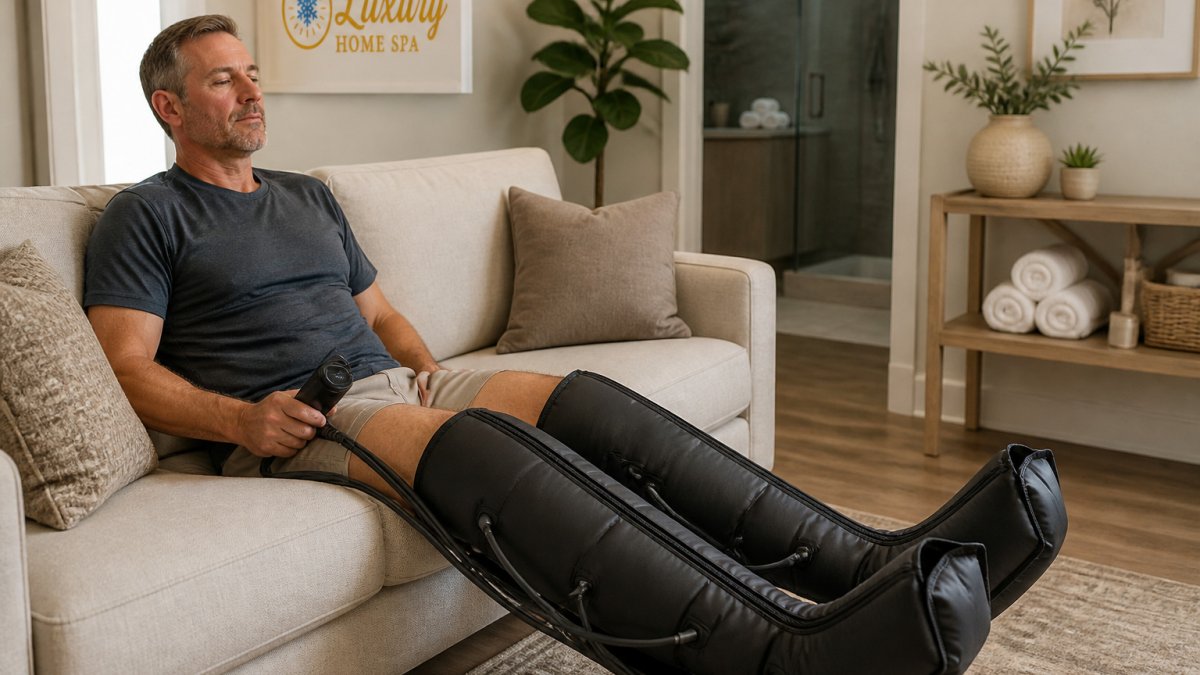
Follow the manufacturer's guidance and let the skin fully rewarm between sessions. When a surgeon or clinician gives a specific protocol, that protocol wins.
How Often to Use Compression Therapy Across the Week
Frequency depends on your activity level and the situation, so plan your schedule around how you feel. The detailed Normatec recovery guide explains how to use the system week to week.
Plan your schedule around how you feel rather than a fixed rule. If swelling or soreness is getting worse instead of better, reduce use and check with a professional.
Cold Compression Therapy Safety and Who Should Avoid It
Cold compression is not risk-free. The two main hazards are cold-related tissue injury and pressure that is too high for too long. Knowing who should avoid it, and what warning signs mean stop, matters more than any benefit claim. For a deeper look at how the cold options compare on safety, read our cold plunge vs ice bath recovery comparison.
Who should talk to a doctor first
Do not start cold compression without medical clearance if you have any of the following:
- Poor circulation or peripheral artery disease. Cold further narrows blood vessels, which can worsen ischemia in limbs that already have reduced flow.
- Diabetes with nerve damage or skin sensitivity. Reduced sensation means you may not feel a cold or pressure injury developing.
- Raynaud's phenomenon or cold sensitivity/allergy. Cold can trigger painful vasospasm or hives.
- Open wounds, recent skin grafts, or fragile skin. Pressure and cold can delay healing or damage tissue.
- A history of blood clots or current clot risk. Compression can be appropriate in some cases, but the pressure level and timing need medical guidance.
- Sickle cell disease or other conditions affected by cold. Cold can trigger painful crises in some people.
- Impaired sensation from any cause, including spinal cord injury or neuropathy.
Warning signs to stop immediately
Stop the session and let the area rewarm if you notice:
- Skin that turns white, gray, waxy, or blotchy
- Numbness, tingling, or a "pins and needles" feeling that does not fade within a few minutes of removing the device
- Pain that increases rather than decreases during the session
- A pressure mark or dent that does not resolve quickly after removing the wrap
- Swelling that worsens after sessions instead of improving
Pressure that is too tight can act like a tourniquet. Loosen the wrap immediately if the limb turns pale, cold, or numb, or if you feel throbbing. Never sleep in a cold compression device or leave it on unattended.
When to seek medical advice
Contact a clinician if:
- Swelling or pain is getting worse after 48 to 72 hours of consistent use
- You develop a fever, spreading redness, or warmth around the area (possible infection)
- You cannot bear weight or move the joint normally
- Numbness or weakness persists after the session
- You have any of the conditions listed above and have not yet discussed cold compression with your care team
Practical pressure-safety rules
- Fit matters more than force. The wrap or sleeve should feel snug but not painful; you should be able to slide a finger under the edge.
- Start low. Begin at the lowest effective pressure setting and increase only if it feels comfortable and does not cause numbness.
- Check skin before and after every session, especially over bony areas like the knee, ankle, and elbow.
- Never apply cold directly to bare skin with ice packs; use a barrier layer.
If you have knee pain or another chronic condition, ask your doctor whether cold compression fits your situation.
Circulation problems, nerve damage, cold sensitivity, and open wounds are reasons to get medical clearance first. Stop immediately for skin color changes, persistent numbness, or worsening pain, and never sleep in a device.
Choosing the Right Compression Recovery System for Your Routine
The right system depends on the body part you need to treat, how often you train, and how much room you have at home. Match the system to your most common need.
At My Luxury Home Spa, we carry a range of recovery equipment for home use. You can request pricing and recommendations from our team.
Frequently Asked Questions
How many times should you do compression therapy?
Frequency depends on your activity level and the situation. Follow the manufacturer's guidance and adjust based on how your legs or the treated area feel afterward. If swelling or pain is not improving after a week of consistent use, check with a healthcare provider before increasing frequency.
Does combining cold and compression reduce swelling?
Cold reduces local blood flow, while steady compression applies pressure to a limb. Results vary by injury, and the approach is not a replacement for medical care for significant swelling.
How long should you use cold compression therapy?
Avoid keeping cold directly on the skin for long periods, and take breaks to check skin color and sensation. Stop if the area becomes numb, pale, or painful. Follow any time limits given by your surgeon or therapist.
Is cold compression therapy safe to use after surgery?
The right timing and settings depend on the procedure and your surgeon's instructions. Do not start or change use without checking with your care team, especially if you have circulation problems, diabetes, or nerve sensation issues. Watch for increasing pain, unusual numbness, or swelling that gets worse rather than better, and contact your provider if these occur.
Cold compression therapy works best when you match the tool to the injury, the stage of recovery, and your own health. Start with the simplest option that solves your problem, then move up only if you need more. Talk to a clinician when pain, swelling, or numbness does not improve.


Leave a comment