

Last Updated: November 2, 2026
Quick Summary
Cold exposure may temporarily dull knee discomfort for some people, but evidence for cold-water immersion as a treatment for knee pain or arthritis is limited. It does not repair cartilage, reverse arthritis, or fix a torn ligament. There is no established cold-plunge temperature or duration for treating knee pain. Ask a healthcare professional whether immersion is appropriate for you, and follow the plunge manufacturer’s safety instructions.
- Cold may change pain sensation temporarily; evidence does not show that a home plunge repairs the joint.
- Research on cold therapy for knee osteoarthritis is limited and does not establish a full-body plunge protocol.
- A wrapped cold pack offers localized cooling; AAOS advises limiting local ice therapy to 20 minutes at a time.
- Cold may worsen stiffness or discomfort for some people. Heat may be more comfortable for stiffness, but avoid heat on a swollen or bruised area.
- Get medical advice before cold immersion if you have heart, blood-pressure, circulation, or sensation concerns. Never plunge alone.
What Cold Plunge Benefits for Bad Knees Can and Cannot Do
Cold plunge benefits for bad knees are best understood as possible short-term changes in comfort, not structural repair. Cold exposure may temporarily dull discomfort for some people. It will not repair cartilage, reverse arthritis, or fix a torn ligament.
That distinction matters. A knee that feels less painful after cold exposure is not necessarily less inflamed or structurally improved. Cold-water immersion may be one comfort measure for some people, but it is not a substitute for diagnosis, rehabilitation, or care recommended by a clinician.
Vasoconstriction, Swelling, and Pain Signals
Vasoconstriction is the narrowing of blood vessels in response to cold. Cold exposure changes blood flow near the skin and can temporarily reduce sensation in the exposed area. Some people experience this as numbing or short-term pain relief.
These effects do not mean that a home plunge selectively cools a deep knee joint or reliably reduces swelling inside the joint. The response varies by person, water temperature, exposure, and the cause of the symptoms. For background on cold-induced vasoconstriction, see this review of cold-induced cutaneous vasoconstriction in humans.
What the Evidence Actually Supports
Cold packs are commonly used for local pain and swelling after an acute injury. The American Academy of Orthopaedic Surgeons’ heat-and-ice guidance recommends ice for acute injuries, inflammation, and swelling, with no more than 20 minutes at a time. It also cautions against ice for people with poor circulation or for stiff muscles and joints.
Research specifically on knee osteoarthritis is more mixed. A 2025 systematic review and meta-analysis found a possible pain benefit from cryotherapy as part of a broader treatment approach, especially alongside exercise therapy. The authors said further research is needed to understand cryotherapy as a stand-alone treatment. Those findings do not establish that full-body cold plunges treat knee arthritis or work better than a local cold pack.
Here is the cautious summary:
- May help temporarily: some people report short-term changes in pain or comfort after cold exposure.
- Not established: a specific cold-plunge temperature, duration, or weekly schedule for knee pain.
- Not a structural treatment: cold plunging does not regrow cartilage, reverse arthritis, or repair tendon or ligament damage.
Read the 2025 systematic review of cryotherapy in knee osteoarthritis for details on the available studies and their limitations.
How a Cold Plunge for Knee Pain Works in Practice
There is no evidence-based cold-plunge protocol for treating knee pain. If a healthcare professional says cold-water immersion is appropriate for you, follow their guidance and the equipment manufacturer’s instructions. Use a conservative approach, avoid pushing through symptoms, and make safety preparations before entering the water.
Before You Plunge
- Ask a healthcare professional first if you have heart disease, high or uncontrolled blood pressure, circulation problems, reduced sensation, Raynaud’s phenomenon, or another condition that could be affected by cold exposure.
- Follow medical advice after an injury or surgery. A newly injured or post-surgical knee may need an individualized plan. Do not use a plunge in place of an examination or your clinician’s instructions.
- Do not enter with an open wound or active infection. If the knee is increasingly red, hot, swollen, or severely painful, contact a healthcare professional.
- Prepare for safe entry and exit. Use a stable step or handhold if available, keep a towel and warm clothing nearby, and make sure the path around the tub is not slippery.
- Do not plunge alone. Cold immersion can affect breathing and alertness, and a person nearby can help if you become unwell.
During the Plunge
- Use the equipment as directed. There is no universal temperature or duration for knee pain. Follow the plunge manufacturer’s instructions and any guidance from your clinician.
- Keep breathing under control. Sudden immersion in cold water can trigger gasping or rapid breathing. Enter carefully and do not submerge your face.
- Pay attention to warning signs. Get out with assistance if you feel dizzy, confused, unusually short of breath, numb, or unable to control shivering. Seek urgent care for chest pain or severe breathing difficulty.
- Do not try to tough it out. A cold session should not involve uncontrolled shivering, worsening pain, or loss of normal sensation.
After the Plunge
- Dry off and warm up gradually. Put on dry, warm clothing and move carefully. Avoid rushing on a slippery floor.
- Notice how your knee responds. Pay attention to pain, stiffness, swelling, and everyday movement after the session and later that day.
- Stop if symptoms worsen. If cold exposure increases pain or stiffness, do not repeat it without getting appropriate advice.
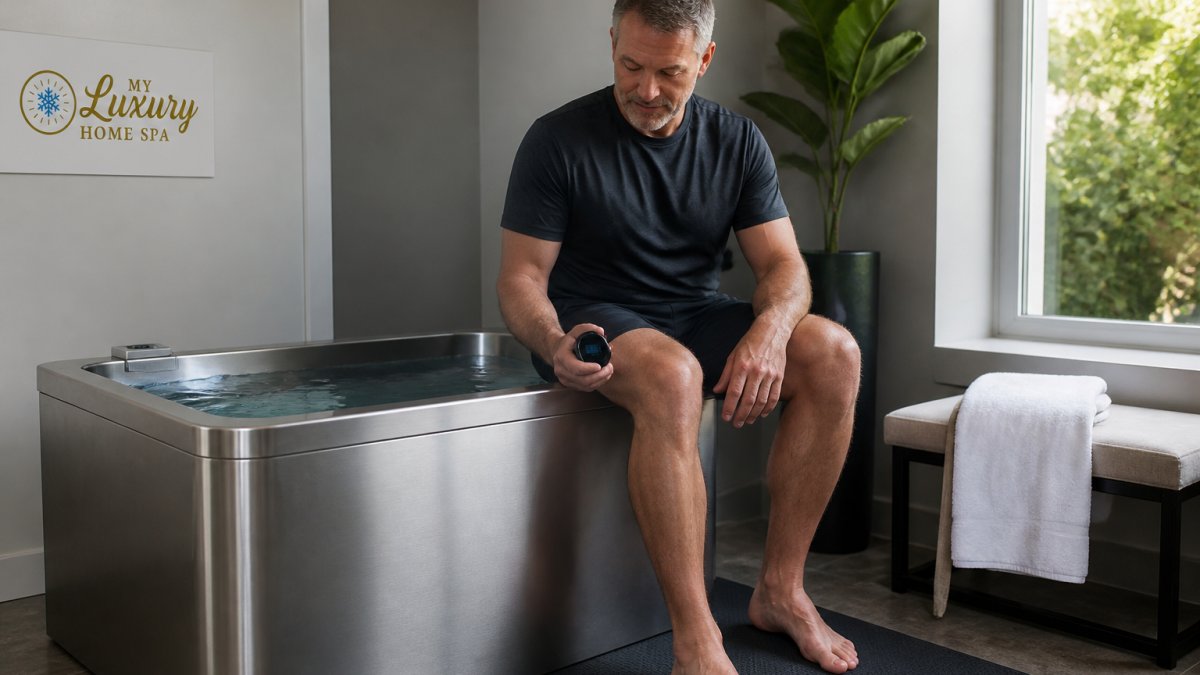
Matching Cold Therapy to the Cause of Your Knee Pain
“Bad knees” can describe many different problems. A knee that becomes sore after activity may have a different cause from one affected by arthritis, an acute sprain, or a recent operation. A clinician can help identify the cause and recommend appropriate care.
Osteoarthritis and Older Joints
Osteoarthritis is a joint condition that can cause pain, stiffness, and changes in mobility. Cold exposure may feel comfortable to some people and uncomfortable or stiffening to others. It has not been shown to reverse osteoarthritis or rebuild cartilage.
For local ice treatment, AAOS advises using ice for no more than 20 minutes at a time and not applying it to stiff joints. Its guidance describes gentle heat as an option for muscle pain or stiffness, but advises against heat on swollen or bruised areas. Follow your clinician’s advice for your symptoms.
Runner’s Knee, Tendonitis, and Post-Workout Soreness
Overuse-related knee pain can have several causes. Cold may temporarily change discomfort after activity, but a plunge is not a treatment plan for runner’s knee or tendon pain. If symptoms keep returning, limit the activity that triggers them and consult a healthcare professional about diagnosis and rehabilitation.
Research on cold-water immersion after exercise often measures general muscle soreness, not treatment of a particular knee injury. Those findings should not be taken as proof that a plunge heals tendon damage or speeds recovery from a knee condition.
Acute Sprains and Post-Surgical Knees
A new sprain or a knee recovering from surgery may need specific care. Follow your surgeon’s or physical therapist’s instructions for icing, compression, movement, and wound care. Do not immerse a healing incision or use a cold plunge after surgery unless your care team has approved it.
Is a Cold Plunge for Arthritis Worth It?
A cold plunge may be worth considering as a general wellness or comfort option if your clinician says it is safe and you enjoy using it. The evidence does not establish cold-water immersion as a treatment for arthritis, and there is no proven plunge protocol for arthritis symptoms.
People respond differently: one person may find cold exposure soothing, while another may feel more pain or stiffness. If you try it with medical guidance, judge it by how you feel and function afterward. Stop if symptoms worsen, and do not continue simply to complete a schedule.
Ice Bath vs. Ice Pack for Knee Pain: Choosing the Right Tool
A cold pack is easier to apply to one area. A cold plunge exposes a much larger part of the body to cold water. Neither should be assumed to treat the underlying cause of knee pain.
Explore Hyperice X 2 Knee, a targeted device with heat, cold, contrast, and compression features →
A cold pack can be a practical option for localized cooling. Place a cloth barrier between the cold pack and skin, and follow the time limits and precautions from your healthcare professional. AAOS recommends no more than 20 minutes at a time for local ice therapy.
A cold plunge provides whole-body cold-water immersion, so it is less targeted than a pack. For a broader overview of cold and compression, see our guide to cold and compression therapy.
The Hyperice X 2 Knee is a wearable device that offers electronically controlled heat, cold, alternating contrast, and adjustable air compression around the knee. It is an equipment option, not a substitute for medical advice. Follow the product’s instructions and consult a healthcare professional if you are unsure whether heat, cold, or compression is suitable for you.

| Option | Where It Applies Cold | Practical Consideration | Guidance |
|---|---|---|---|
| Wrapped cold pack | Localized area around the knee | Easy to target one area; use a barrier between the pack and skin. | AAOS advises no more than 20 minutes at a time; avoid if you have poor circulation. |
| Cold-water plunge | Larger areas of the body | Requires safe entry and exit; cold exposure affects more than the knee. | No established duration or temperature for treating knee pain. Follow clinician and manufacturer guidance. |
| Targeted heat/cold device | Specific joint or body area, depending on device | Settings and fit vary by product. | Follow the device instructions and ask a clinician if heat, cold, or compression may not be appropriate for you. |
Cold Plunge Duration and Safe Limits for Knees
There is no well-established cold-plunge duration, temperature, or weekly schedule for treating knee pain or arthritis. Recommendations sometimes shared online—such as a specific number of minutes or a week-by-week progression—should not be treated as medical protocols.
If a healthcare professional says immersion is appropriate for you, follow their guidance along with the plunge manufacturer’s instructions. Do not extend a session to meet a target. Leave the water if you feel dizzy, confused, unusually short of breath, numb, or unable to control shivering.
For local ice packs, use a cloth barrier and follow your clinician’s instructions. AAOS recommends limiting ice application to no more than 20 minutes at a time.
When Cold Therapy Is the Wrong Choice for Your Knees
Cold-water immersion is not suitable for everyone. Talk with a healthcare professional before starting if you have:
- Heart disease, a heart rhythm condition, or high or uncontrolled blood pressure
- Poor circulation, peripheral vascular disease, or Raynaud’s phenomenon
- Reduced sensation, nerve damage, or a condition that affects how you feel temperature
- A history of cold allergy or cold-induced hives
- A recent operation, an open wound, or an active infection
Cold may also increase stiffness or discomfort for some people. Stop if your knee feels worse, and ask a clinician what to try instead. Do not use a plunge when a joint is hot, rapidly swelling, or severely painful without first getting medical advice.
Tracking Whether Cold Water Is Actually Helping Your Knee
If your clinician approves cold-water immersion, pay attention to symptoms and daily function rather than relying on how the session feels in the moment. A temporary change in pain does not show that the joint has healed or that swelling has changed.
You can note a few consistent measures before and after a session:
- Pain: Rate it using the same 0-to-10 scale each time.
- Stiffness: Note how long morning stiffness lasts or how a familiar movement feels.
- Swelling: Record visible changes or a feeling of tightness.
- Function: Notice a daily task, such as walking or climbing stairs.
- Duration of any change: Note whether relief lasts briefly, longer, or not at all.
Stop if symptoms worsen. There is no proven test period for cold plunging with joint pain, so do not keep using it for weeks just to complete a trial schedule.
Choosing a Cold Plunge Setup for Knee Recovery
If you are considering a cold plunge for general wellness or recovery, choose equipment based on your available space, temperature-control needs, maintenance preferences, and budget. For knee symptoms, a cold plunge has not been shown to be more effective than local cooling.
Consider these practical factors:
- Entry and exit: Look for a setup you can enter and leave safely. A stable step or handhold may be helpful.
- Temperature control: Check the system’s available settings and the manufacturer’s operating instructions.
- Water care: Review filtration, cleaning, and maintenance requirements.
- Footprint and installation: Measure the planned location and check the product’s site requirements before ordering.
For product and planning details, see our cold plunge buying guide and cold plunge installation and ownership cost guide. For more about cold exposure and joint symptoms, read cold plunge benefits for joint pain.
Two cold-plunge options in our catalog are the Sierra Spa Home Spa Cold Plunge Pro and the Colderatti Hyperpod Pro. Check each product page for current features, pricing, availability, and requirements.


Knee pain can have many causes, and cold exposure is not the right choice for everyone. If you are exploring cold plunges for general wellness, compare the equipment, installation needs, and maintenance requirements before choosing a system. My Luxury Home Spa is a veteran-owned retailer and authorized dealer of premium wellness products. Contact our team with questions about product features, delivery, or manufacturer warranty information.
Frequently Asked Questions
Can a cold plunge help with knee pain?
Cold exposure may temporarily change pain or comfort for some people, but evidence for cold-water immersion as a treatment for knee pain or arthritis is limited. It does not repair cartilage or replace medical care. Ask a healthcare professional whether immersion is appropriate for your condition.
How long should you stay in a cold plunge for knee pain?
There is no established cold-plunge duration for treating knee pain. If a healthcare professional says immersion is appropriate, follow their advice and the manufacturer’s instructions. Get out if you feel dizzy, confused, unusually short of breath, numb, or unable to control shivering. Never plunge alone.
Is cold water therapy better than an ice pack for knee pain?
They provide different types of exposure. A wrapped cold pack targets a small area, while a plunge exposes a much larger part of the body to cold water. Neither should be assumed to treat the cause of knee pain. For local ice therapy, AAOS advises no more than 20 minutes at a time and cautions against use in people with poor circulation.
Can a cold plunge make knee pain worse?
Yes. Some people feel more stiffness or discomfort after cold exposure. Stop if your symptoms worsen, and ask a healthcare professional whether another approach may be more suitable. People with heart, blood-pressure, circulation, or sensation concerns should get medical advice before cold immersion.


Leave a comment