

Last Updated: November 5, 2026
Whether you need a professional sauna installer depends on the sauna, the work involved, the manufacturer’s instructions, and local code. New wiring, hardwired heaters, gas connections, structural changes, and permit-required work should be handled by the appropriately licensed trade. Homeowners can often assemble a prefabricated kit when the site and utilities are ready and the manufacturer allows it.
- Many traditional sauna heaters and some infrared models require a dedicated circuit or hardwired connection. Check the exact model’s manual and use a licensed electrician where required.
- Permit requirements vary by city, county, and state. Ask the local building department about your specific installation.
- Do not assume an outdoor sauna or a “kit” is electrically simple; the site, heater, and local rules determine the work.
- Typical homeowner tasks include unpacking, assembling prefabricated panels, and preparing a level location, if the manufacturer’s instructions permit them.
- Follow the installation manual and keep permits, inspection records, and contractor documentation with your home records.
The Short Answer: When Professional Sauna Installation Is Needed
Professional sauna installation may be needed when the project involves new electrical work, a hardwired heater, gas piping, structural changes, or work that local code requires a licensed contractor to perform. A homeowner may be able to assemble a prefabricated indoor kit when the location is ready, the manufacturer permits homeowner assembly, and the electrical requirements are already met.
The details depend on the sauna model and the home. Before delivery, review the manufacturer’s installation instructions and our step-by-step guide to preparing for sauna delivery.
Many traditional sauna heaters need a dedicated circuit and professional electrical work. Some infrared products use a plug and existing receptacle, while others have different electrical requirements. Check the exact model instead of relying on a general rule.
This guide explains how to plan the work, check permit requirements, and decide which tasks belong to a professional.
Installations That Usually Need a Professional
Electrical, gas, structural, and commercial work often requires a licensed trade, permit, or inspection. The exact requirements depend on the equipment and local jurisdiction.
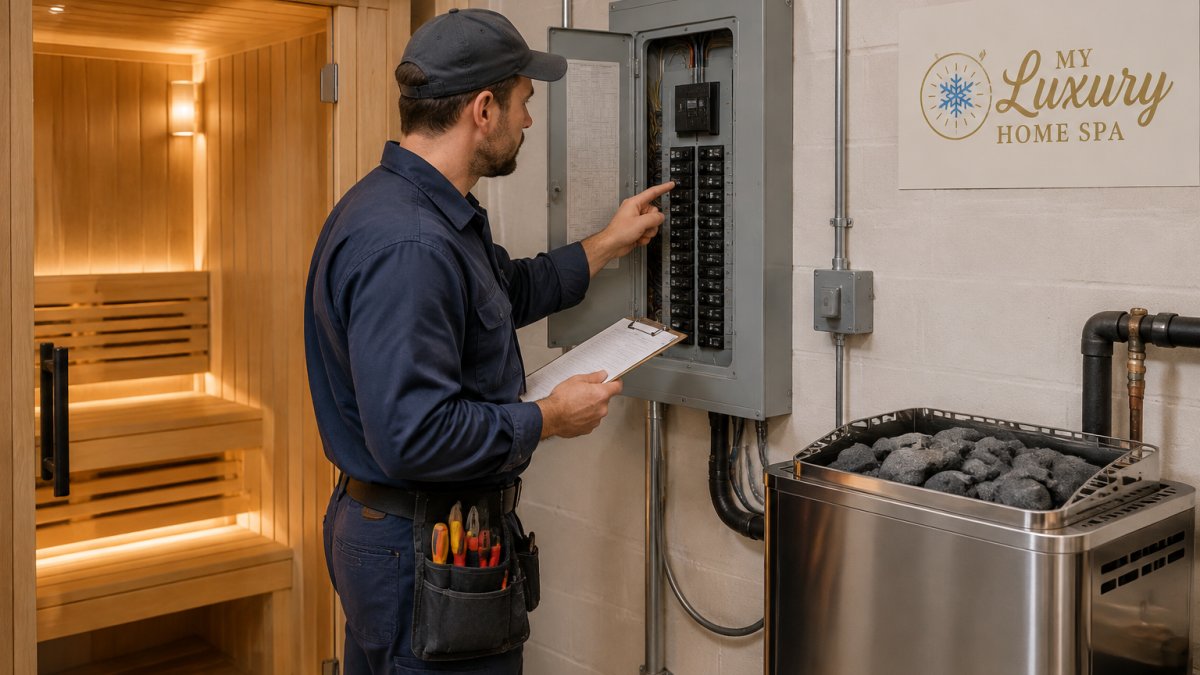
- New wiring or hardwiring: Have a licensed electrician determine and perform the work required by the heater manual and local code.
- Gas heaters: Gas piping and appliance connections should be handled by a qualified, licensed professional where required. Ask the local authority about permits and inspections.
- Structural changes: Altering framing, building a platform, or changing a room may require a contractor or permit, depending on scope and location.
- Commercial installations: Public or business use may involve additional building, fire, accessibility, and operating requirements. Confirm them with the local authorities before planning the build.
What a Capable Homeowner May Be Able to Handle
Homeowner assembly is most realistic when the sauna is prefabricated, the location is ready, and the manufacturer’s instructions allow the owner to assemble it. Electrical work still needs to meet the heater’s specifications and local rules.
For example, the KOHLER C1 Indoor Sauna in Graphite Grey is a prefabricated indoor sauna, but it requires a dedicated electrical service. KOHLER recommends professional installation, and its electrical preparation should be planned with a licensed electrician.

Tasks that may be suitable for a homeowner, when the manual permits them, include:
- Unpacking and checking the shipment for visible damage
- Assembling prefabricated panels according to the instructions
- Preparing a level, stable floor or base
- Completing approved finish work, if specified by the manufacturer
- Cleaning the sauna and following the manufacturer’s first-use instructions
A kit still needs the correct clearances, a suitable floor, and the required electrical service. Confirm those details before assembly begins.
Sauna Installation Permits: What to Ask Your Local Building Department
There is no single permit rule that applies to every sauna installation. A permit may be required for electrical, plumbing, structural, or other regulated work, but requirements and exemptions differ by jurisdiction. Contact the local building department before work starts and describe the specific sauna, heater, location, and proposed work.
How to Verify Local Requirements
- Find the authority for your address. Check whether the city or county handles permits for your property. If you are unsure, call the local permit office and ask.
- Describe the project specifically. For example: “I’m installing an indoor traditional sauna with a hardwired 240-volt heater in an existing room. Does this require an electrical permit, a building permit, or both?”
- Ask what documents are needed. The office may request a product specification sheet, installation manual, site plan, or electrical details.
- Ask who may apply for the permit. Some jurisdictions allow homeowners to apply for certain work on their residence; others require a licensed contractor. Confirm the rule for your scope.
- Confirm inspections and timing. Ask whether there are rough-in or final inspections, when they occur, and how to schedule them.
Work That May Trigger a Permit
Depending on local rules and the scope of work, permit questions may arise when you are:
- Adding or modifying an electrical circuit, panel, or subpanel
- Building a structure, deck, or platform for an outdoor sauna
- Adding gas piping, plumbing, or drainage
- Altering framing or converting an existing room or space
- Installing equipment in a commercial or public setting
Permits, Inspections, and Who Applies
Who applies for a permit depends on local rules and the work being done. A contractor may apply for a trade permit when required, while a homeowner may be allowed to apply for some work at their own residence. Ask the permitting office rather than assuming.
If an inspection is required, ask when it must occur. Electrical work may need to be inspected before it is concealed. Keep permit records and inspection approvals with your home documents.
Unpermitted work can create complications if it is later questioned during a renovation, inspection, or sale. Ask the local building department how to handle your project before work begins.
Sauna Electrical Requirements and When to Hire an Electrician
Electrical requirements depend on the exact heater or sauna model. Voltage, amperage, connection type, circuit protection, and clearances must match the product documentation and local code. A licensed electrician can confirm whether the existing service is suitable and what work is needed.
Electrical Planning Checklist
- Check the connection type. Find out whether the unit is cord-and-plug or hardwired. Do not modify the cord, plug, or connection method unless the manufacturer’s instructions allow it.
- Check circuit requirements. Confirm the required voltage, amperage, breaker, conductor, and whether the circuit must be dedicated.
- Check the existing circuit. Do not assume a nearby receptacle or breaker is correctly sized or dedicated. An electrician can verify the circuit and its condition.
- Check panel capacity. An electrician can assess whether the panel can support the additional load and whether an upgrade or other work is needed.
- Check disconnect and protection requirements. Follow the manufacturer’s instructions and local code for disconnecting means and GFCI or other protection.
- Plan outdoor wiring carefully. Outdoor installations may require weather-rated equipment, wiring methods, and enclosures appropriate to the location. The electrician should select and install components for the actual conditions.
If a model uses a listed cord-and-plug connection on an existing circuit that meets its specifications, the homeowner may only need to assemble the sauna and connect it as instructed. Confirm the requirements for the specific model before relying on that assumption.
Voltage, Circuits, and Panel Capacity
Voltage and amperage describe the electrical service the unit requires. A dedicated circuit serves the sauna alone when the manufacturer or code requires it. Panel capacity is assessed against the home’s electrical load and the applicable code.
Use the sauna’s nameplate and installation manual to identify its requirements. The electrician should determine the appropriate circuit and wiring; do not select a breaker or wire size by guesswork.
For outdoor setups, the SaunaLife waterproof electrical enclosure is one product intended to protect compatible electrical components. It does not replace code-compliant wiring or a professional assessment. A HUUM UKU Glass control package is a separate control product; confirm compatibility with the heater and system before purchase or installation.


When to Hire a Licensed Electrician
- The heater is hardwired or the manual specifies professional electrical installation
- A new circuit, panel work, or other wiring changes are needed
- You cannot verify that the existing circuit meets the sauna’s requirements
- The project requires a disconnect or circuit protection you do not already have
- The sauna will be outdoors or in a location with special electrical requirements
- You are uncertain about any part of the electrical plan
Explore the KOHLER C1 Indoor Sauna in Graphite Grey →
DIY Sauna Installation: What You May Safely Do Yourself
DIY sauna installation may be appropriate for assembly, placement, and approved finish work on some prefabricated kits. Electrical, gas, plumbing, and structural tasks should be handled according to the manufacturer’s instructions, local code, and licensing rules.
Homeowner tasks may include:
- Unpacking and checking the delivery
- Assembling prefabricated panels as directed
- Preparing a level, stable surface
- Completing manufacturer-approved finish work
- Cleaning the unit and following first-use instructions
Bring in the appropriate professional for:
- New circuits, panel changes, or hardwired connections
- Gas line work
- Structural changes or a raised platform that requires construction
- Plumbing or drainage work
Coordinate electrical preparation before the sauna is assembled if the electrician needs access to walls, floors, or connection points. Follow the project sequence specified by the manufacturer and installer.
Site Preparation, Flooring, and Ventilation
Prepare the floor, clearances, ventilation, and utilities before assembly. The exact requirements vary by sauna model, so use the manufacturer’s manual for dimensions, load limits, and airflow instructions.
Start with the floor. Confirm that it is level and can support the sauna, heater, and occupants. Some models require a particular floor surface or added support. If you are unsure about the floor’s load capacity, consult a qualified contractor or structural professional.
Follow the sauna and heater instructions for clearances from walls, ceilings, and combustible materials. Do not substitute a general clearance rule for the model-specific requirements.
Ventilation requirements differ by sauna design and room layout. Follow the manufacturer’s instructions for intake and exhaust openings, and review our guide to home sauna ventilation requirements.
For outdoor saunas, plan a suitable base, drainage, and weather protection as specified by the manufacturer. Do not assume every outdoor sauna requires the same foundation or insulation.
Who Does Which Part of the Work
Use this task list to plan who will handle each part. Local code and the sauna’s installation manual determine which tasks require a professional.
| Task | Who May Handle It | Planning Note |
|---|---|---|
| Confirm permits and code | Homeowner and local building department | Requirements vary by location and project scope. |
| New circuit or panel work | Licensed electrician, where required | Follow the heater manual and local electrical code. |
| Gas line connection | Qualified, licensed gas professional | Confirm local licensing, permits, and inspection requirements. |
| Platform, framing, or structural work | Contractor or homeowner where permitted and appropriate | Confirm load, construction, and permit requirements. |
| Panel and bench assembly | Homeowner or installer, if instructions allow | Follow the model-specific assembly manual. |
| Ventilation setup | Homeowner or qualified contractor | Follow the sauna and room ventilation instructions. |
| Required inspection | Local building inspector | Schedule each inspection at the required project stage. |
| First use and operating check | Homeowner, following the manual | Use the manufacturer’s startup and safety instructions. |
Assign an owner to each task before delivery so permit questions, electrical preparation, and assembly are coordinated.
Sauna Installation Cost: DIY vs. Professional Labor
Sauna installation costs depend on the unit, site preparation, electrical or gas work, permits, delivery access, and assembly labor. Request project-specific quotes before ordering because labor and permit costs vary by location and scope.
What Affects the Total Cost
- The sauna: Price depends on the model, size, configuration, and options. Check the current product listing for pricing.
- Electrical work: A new circuit, long wire run, or panel work can change the project cost. Ask an electrician for a quote based on the exact heater specifications and site.
- Site preparation: Floor leveling, structural support, platform construction, or drainage may add work.
- Permits and inspections: Fees and requirements vary by jurisdiction.
- Delivery and access: Stairs, narrow passages, or difficult access may affect handling or installation arrangements.
- Assembly: Some products include installation options; confirm what is included and what is excluded for your destination.
DIY assembly may reduce assembly labor when the manufacturer allows it, but it does not eliminate required electrical, gas, structural, or permit costs.
Warranty, Liability, and Insurance Considerations
Installation that does not follow the manufacturer’s instructions or local requirements may affect warranty coverage or create issues if a loss occurs. The outcome depends on the warranty terms, insurance policy, and circumstances. Review the documents that apply to your sauna and home before work begins.
- Warranty: Follow the manufacturer’s installation and maintenance instructions. Ask the manufacturer how installation choices affect coverage.
- Documentation: Keep receipts, contractor information, permits, inspection records, and product manuals.
- Insurance: Contact your insurer if you have questions about coverage for the installation or any required documentation.
- Resale: Permit records and installation documentation can help answer questions during a future inspection or sale.
My Luxury Home Spa is an authorized dealer for the brands we carry. Warranty coverage and terms vary by product; review the product’s warranty documentation for details.
Request Pricing and Recommendations for Your Sauna Project
The right installation plan depends on the sauna’s electrical and site requirements, the manufacturer’s instructions, and local rules. Confirm trade work and permit requirements first, then decide which assembly tasks you can handle safely.
My Luxury Home Spa is a veteran-owned sauna and wellness equipment retailer. We can help you compare models, review product requirements, and plan questions to ask your electrician or local building department.
Ready to plan your build? Contact My Luxury Home Spa for product guidance and recommendations for your space.
Frequently Asked Questions
Do I need a permit to install a sauna?
It depends on the sauna and the work involved. Your jurisdiction may require permits for electrical, plumbing, structural, or other regulated work, while some installations may be exempt. Contact your local building department before starting and describe the exact model, location, and planned work.
Do I need an electrician to install a home sauna?
Many sauna heaters require a dedicated circuit, hardwired connection, or other electrical work that should be completed by a licensed electrician where required. A plug-and-cord model may have simpler requirements, but check its manual and local rules. An electrician can verify whether an existing circuit is suitable.
Can I install an indoor sauna myself?
You may be able to assemble a prefabricated kit if the manufacturer’s instructions allow homeowner assembly and the site is prepared. Electrical, gas, plumbing, or structural work may require a licensed professional or permit. Confirm the requirements for your model and location before beginning.
What is the average cost to install a sauna?
There is no single average that fits every project. The total depends on the sauna, electrical or gas work, site preparation, permits, delivery access, and assembly labor. Check current product pricing and get local quotes for the installation work before ordering.


Leave a comment