

Last Updated: November 4, 2026
Quick Summary
Energy efficient hot tubs for winter hold heat in through full-foam or multi-layer insulation, a tight-fitting UV-rated cover, and built-in freeze protection, so the heater runs less often. Our picks range from the $3,990 Luxury Spas USA Lacey Hybrid to the $7,990 five-person Liberty. Match capacity to how you actually soak, and fix the cover and seals before sizing the heater.
- Full-foam insulation fills the cabinet around the plumbing and shell, slowing heat loss and protecting pipes from freezing.
- The Sierra Spas Solace 110V runs on a dedicated 15A GFCI circuit and converts to 240V for faster heat recovery.
- The Luxury Spas USA Cascade Elite pairs full-foam insulation with a 5.5 kW titanium heater on a 240V circuit.
- A 30-minute soak with jets in 20°F air can trigger a recovery cycle a covered, idle spa never sees.
- Replace your hot tub cover typically every 3-5 years to keep heat retention strong.
Table of Contents
- What Makes Energy Efficient Hot Tubs for Winter Different
- Quick Comparison: Energy Efficient Hot Tubs for Winter
- Sierra Spas Solace 110V: Best Compact Plug-and-Play for Cold Patios
- Luxury Spas USA Largo Hybrid: Best Dual-Lounger Layout for Winter Soaking
- Luxury Spas USA Cascade Elite: Best Full-Foam Insulation in a Two-Person Spa
- Luxury Spas USA Allure Elite: Best 240V Heater for Fast Temperature Recovery
- Luxury Spas Liberty 5-Person: Best for Households That Soak Together in Winter
- Hot Tub Insulation for Cold Weather: What Actually Reduces Heat Loss
- Hot Tub Winter Running Costs: What Electricity Use Really Looks Like
- Hot Tub Winter Maintenance: Freeze Protection and Equipment Care
- Frequently Asked Questions
What Makes Energy Efficient Hot Tubs for Winter Different
Energy efficient hot tubs for winter are built around one goal: holding heat in when the air around them is trying to pull it out. Winter separates well-built spas from cheap ones. A tub that runs fine in July can become a financial drain in January if it lacks proper insulation, a tight cover, and freeze protection.
Below, we break down what actually matters, then compare seven models we carry, from compact plug-and-play units to five-person spas.
The critical difference is not heater wattage. It is how well the shell, cabinet, and cover work together to reduce heat loss. A powerful heater in a poorly insulated tub just spends more energy replacing heat that escaped.
Insulation, Seals, and Heat Retention
Three things drive winter heat retention: full-foam or multi-layer insulation around the plumbing and shell, a tight-fitting cover that seals at the edges, and weather-resistant components that resist freezing and wind exposure. When these work together, the heater runs less often.
Full-foam insulation fills the cabinet cavity around the plumbing and shell, slowing heat loss from the water and protecting pipes from freezing temperatures. Multi-layer foam insulation does a similar job in hybrid models. A tight-fitting cover with a secure seal traps heat at the surface, where most loss occurs.
The U.S. Department of Energy guidance on pool and spa heating notes that covers and insulation are among the most effective ways to cut energy consumption for heated water. If you are comparing specs, ask how the cabinet is insulated, how thick the cover is, and whether the spa lists built-in freeze protection.
Quick Comparison: Energy Efficient Hot Tubs for Winter
Here is how the seven models we carry compare on the factors that matter most in cold weather.
| Model | Capacity | Insulation / Cover | Electrical | Price | Best For |
|---|---|---|---|---|---|
| Sierra Spas Solace 110V | 3 person | Built-in freeze protection, UV-rated cover | 120V plug-and-play, 240V convertible | $4,690 | Cold patios, easy setup |
| Luxury Spas USA Largo Hybrid | 3 person | Multi-layer foam, UV-rated cover | 120V, 240V hybrid | $5,690 | Couples wanting dual loungers |
| Luxury Spas USA Cascade Elite | 2 person | Full-foam insulation, UV-rated cover | 240V / 50A | $5,690 | Full-foam in a compact spa |
| Luxury Spas USA Allure Elite | 3 person | Full-foam insulation, UV-rated cover | 240V / 50A | $5,690 | Fast temperature recovery |
| Luxury Spas Liberty 5-Person | 5 person | Insulated cover | 240V / 50A | $7,990 | Households soaking together |
| Luxury Spas Tahoe 4-Person | 4 person | Insulated cover | 120V, 240V hybrid | $4,990 | Open social seating |
| Luxury Spas USA Lacey Hybrid | 1 person | Insulated cover | 120V, 240V hybrid | $3,990 | Solo winter soaking |
Two more hybrid options round out the comparison: the Luxury Spas Solace 3 Person Hybrid Hot Tub and the Luxury Spas Tahoe 4 Person Hot Tub. Both give you a lower-wattage starting point if you want to keep electrical work simple.


Sierra Spas Solace 110V: Best Compact Plug-and-Play for Cold Patios
The Solace is a 120V plug-and-play spa that runs on a dedicated 15A GFCI circuit.
Its 2 kW titanium heater runs on 120V and steps up to 4 kW if you convert to 240V later. That upgrade path matters in cold weather: a 240V conversion gives you faster heat recovery when the ambient temperature drops. The 16 jets and 2 HP pump keep the footprint small at 79 by 59 inches, which suits tight patios and decks.
Best for: first-time owners and small spaces where a dedicated 240V line is not practical yet. Skip if: you want maximum jet coverage or a larger open seating layout.
Watch out: plug-and-play does not mean "any outlet." The Solace needs a dedicated 15A circuit, and extension cords are not safe with a spa. Confirm your outlet before delivery.
Luxury Spas USA Largo Hybrid: Best Dual-Lounger Layout for Winter Soaking
For couples who want to recline side by side, the Largo Hybrid is the strongest layout we carry. It pairs two side-by-side loungers with a bucket seat, so two people can stretch out together after a cold day.
Winter performance comes from multi-layer foam insulation and a UV-rated insulated cover, both included. The 1.4 kW titanium heater runs on 120V, and the spa is listed as a 240V hybrid if you later want more output. Twenty adjustable jets and a 2 HP multi-speed pump handle the massage, and Bluetooth audio plus multi-zone lighting make evening soaks more inviting.
Best for: couples and smaller households who prioritize lounge comfort. Skip if: you regularly host three or more bathers who want upright seating.
Luxury Spas USA Cascade Elite: Best Full-Foam Insulation in a Two-Person Spa
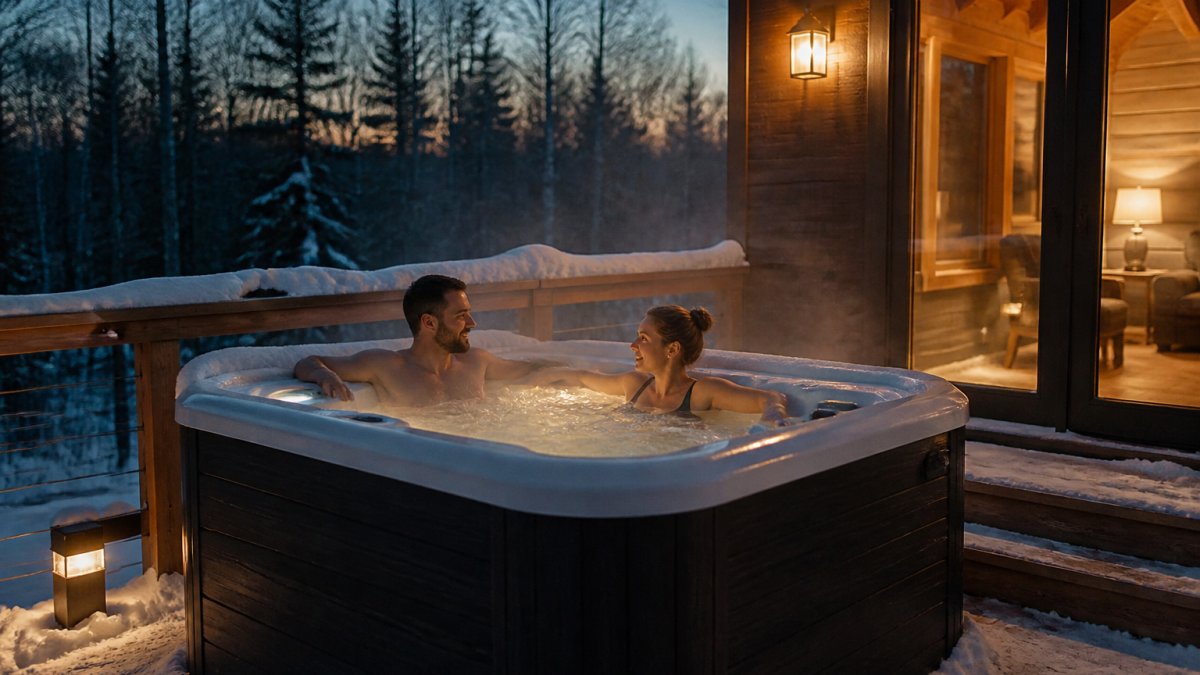
The 5.5 kW titanium heater runs on a dedicated 240V circuit, and 29 stainless steel jets cover back, calf, and foot zones. Dual loungers make it a genuine couples' spa rather than a bench-seat compromise. Balboa touchscreen controls, ozone-assisted water care, and an included UV-rated cover and steps round out the package.
Best for: couples in cold climates who want the best insulation in a compact size. Skip if: you need seating for three or more, or you cannot install a 240V circuit.
Luxury Spas USA Allure Elite: Best 240V Heater for Fast Temperature Recovery
The separate circulation pump keeps water moving through filtration independently of the jet pump, which supports steadier temperature and cleaner water. Full-foam insulation and an included UV-rated cover and steps help hold that heat between sessions. It seats up to three adults with a lounge plus additional seating. Because keeping the water moving and well insulated helps preserve heat between sessions, pairing those habits with ways to lower water heating bills can make winter soaking more economical.
Best for: buyers who want fast heat recovery and a lounge-focused three-person layout. Skip if: you want the smallest possible footprint, since it measures 86 by 62 inches.
You can review the full Sierra Spa Allure Elite Series 3 Person Hot Tub details and purchase options on its product page.
Sierra Spas Solace 110V Series 3-Person Hybrid Hot Tub →

Luxury Spas Liberty 5-Person: Best for Households That Soak Together in Winter
Families and frequent hosts should look at the Liberty. It seats up to five adults across 51 adjustable jets powered by two 3 HP pumps, with a separate circulation pump for filtration. That combination keeps the water moving and the temperature steady even when several people are in the tub.
A 5.5 kW titanium heater runs on a dedicated 240V circuit, and the included insulated cover helps retain heat. Bluetooth audio, illuminated waterfalls, and three cushioned neck pillows make it a social spa rather than a solo retreat. It measures 83 by 83 inches, so plan your pad and access route carefully.
Best for: households of four or five who soak together regularly through winter. Skip if: you soak alone most nights, or you need White Glove placement, since this model ships curbside only.
Hot Tub Insulation for Cold Weather: What Actually Reduces Heat Loss
Insulation is the envelope, but the envelope only performs as well as its installation and its surroundings. Most heat escapes through three paths, the water surface, the cabinet walls, and the plumbing, and each has a specific fix. That is where winter performance is actually won or lost.
The three heat-loss paths and their fixes
- Water surface: a thick, tight-fitting cover with a secure seal and a floating blanket underneath traps heat where most of it escapes. A sagging or waterlogged cover is the single most common efficiency failure.
- Cabinet walls: full-foam insulation fills the cavity around the shell and plumbing; multi-layer or hybrid foam uses panels and reflective barriers. Full foam generally retains more heat but can complicate service access; panel systems are easier to service but demand tight seams.
- Plumbing and equipment: foam-wrapped pipes and an insulated equipment bay protect against freeze damage and reduce heat loss from circulating water. A separate circulation pump moving water slowly through insulated lines loses less heat than cycling a large jet pump.
- Air gaps and seams: weather-resistant cabinet panels, sealed seams, and a fitted cover skirt reduce wind-driven infiltration, which is a major winter variable.
Installation and site factors that change heat loss
Two spas with identical insulation can perform very differently based on where and how they sit.
- Wind exposure: a spa on an open, windy deck loses more heat through the cabinet and cover than one sheltered by a wall, fence, or windbreak. A simple screen or privacy wall on the prevailing-wind side can meaningfully cut standby loss.
- Foundation and elevation: a solid, level pad keeps the cabinet sealed and the cover aligned. A settling or uneven base twists the shell, opens seams, and lets the cover sit poorly, all of which leak heat.
- Electrical supply and access: a dedicated 240V GFCI circuit sized for the heater and pumps is required for most full-size spas; 120V plug-and-play models need a dedicated 15A circuit. Plan the run and permit before delivery, because a long or undersized run adds cost and can limit heater performance.
- Placement and clearance: leave room for the cover lifter, equipment access, and snow removal. A spa boxed in against a wall is hard to service and traps snow against the cabinet.
- Drainage and snow load: keep the pad draining away from the cabinet and clear snow from the cover and equipment panel so air can circulate and the cover is not stressed.
Efficiency trade-offs by size and usage
Bigger and busier is not automatically less efficient per soak, but it changes the load. A five-person spa holds more water and has more surface area, so standby loss is higher; if it is used often by a full household, the cost per soak can still be reasonable. A compact two- or three-person spa with full foam and a tight cover typically has the lowest standby draw, which suits solo or couple use. Jet use and open-cover time are the wild cards: a large spa used briefly costs more per soak than a small spa used the same way, while a large spa used nightly by four people spreads its standby cost across more bathers. Match capacity to how you actually soak, and put the insulation budget where the heat escapes.
Watch out: adding a powerful heater to compensate for a weak envelope raises electricity use instead of lowering it. Fix the cover, seals, and insulation first, then size the heater to the space.
Hot Tub Winter Running Costs: What Electricity Use Really Looks Like
That leaves you without a number to plan around. The honest answer is a range, not a single figure, because winter electricity use depends on four measurable variables: heat retention, setpoint, usage, and your utility rate. Below is how to build a realistic monthly estimate and where the biggest swings come from.
The four variables that set your bill
- Heat retention: a full-foam, well-sealed spa with a tight cover loses far less standby heat than a cabinet-only insulated model. Standby loss is the dominant cost in cold weather because it runs 24 hours a day.
- Setpoint: every degree you lower the water temperature reduces the temperature difference between water and air, which cuts standby energy. Many owners run 100-102°F for soaking and drop to 95-98°F during the week.
- Usage and jet use: opening the cover in freezing air dumps heat fast, and running jet pumps adds electrical load. A 30-minute soak with jets in 20°F air can trigger a recovery cycle that a covered, idle spa never sees.
- Utility rate: residential rates vary widely by region and season. Check your bill for the all-in price per kilowatt-hour, including supply and delivery charges, because that is the number that multiplies your kWh.
A realistic monthly range
A poorly insulated spa with a warped cover can exceed that range substantially, which is why the envelope matters more than heater wattage.
These are planning ranges, not guarantees. Your climate, wind exposure, cover condition, and rate will move the number. The reliable method is to read your meter: note the reading, run the spa normally for a week without changing settings, read again, and multiply the daily kWh by your rate. That gives you a baseline you can compare against after adding a new cover or adjusting the setpoint.
Apples-to-apples efficiency comparisons
Manufacturers rarely publish energy use under identical conditions, so comparing brochures is misleading. To compare fairly, ask for the same inputs across models: insulation type and thickness (full foam versus multi-layer versus cabinet-only), cover R-value or thickness and seal design, heater wattage and whether a separate circulation pump is used, and the test conditions behind any efficiency claim. A spa tested at 70°F ambient tells you little about January performance. Where a manufacturer cites a third-party or standardized test, note the ambient temperature, water temperature, and cover condition; without those, the figure is marketing, not evidence.
Where the money actually goes over time
Purchase price is only the first cost. Total winter ownership includes the spa itself, any 240V electrical work (a dedicated GFCI circuit and permit can add meaningful cost), the pad or foundation, electricity, water chemistry, and eventual replacement of the cover, typically every 3-5 years, plus pumps or a heater over the spa's life. A cheaper spa with weak insulation can cost more over five winters than a better-insulated model with a higher sticker price. When you compare the seven models above, weigh the electrical requirement and insulation package alongside the price, not after it.
Hot Tub Winter Maintenance: Freeze Protection and Equipment Care
Winter maintenance is mostly about preventing freeze damage and keeping equipment reliable. A frozen pipe or failed pump can turn a relaxing spa into an expensive repair, and most of that risk is avoidable with a simple routine.
Follow this checklist through the cold months:
- Keep the cover sealed and secured between sessions to hold heat and keep out debris.
- Confirm the heater and circulation pump are running; moving water resists freezing.
- Check the built-in freeze protection is active if your model has it, like the Solace.
- Test water chemistry weekly; cold water changes how sanitizer behaves.
- Clear snow and ice from the cover and equipment panel so air can circulate.
- Inspect the cabinet and seals for drafts or damage after storms.
- If you plan an extended absence, follow the manufacturer's winterization steps rather than guessing.
Watch out: never cut power to a filled spa in freezing weather to "save energy." Without circulation and heat, standing water in the plumbing can freeze and crack components.
If you are upgrading equipment or adding a spa to a cold-weather setup, browse the Luxury Home Hot Tub Galley Elite to compare options before the season turns.
Winter is the real test of any hot tub, and the difference between a relaxing soak and a costly mistake comes down to insulation, a tight cover, and freeze protection. At My Luxury Home Spa, we carry authorized models backed by full manufacturer warranties, with free delivery on most items and flexible payment options. Get started with My Luxury Home Spa and find the energy efficient hot tub that keeps your winter soaks warm without running up your bill.
Frequently Asked Questions
How much does it cost to run a hot tub per month in the winter?
Winter electricity use depends on your local utility rate, the ambient temperature, your temperature setting, and how often the cover comes off. A smaller spa with full-foam insulation and a tight-fitting cover holds heat far better than a large tub with a thin shell. Ask for the model's insulation details and heater wattage, then multiply your local kilowatt-hour rate by the spa's documented draw.
Which hot tub is the most energy-efficient for cold weather?
Full-foam insulation, a tight-fitting insulated cover, and a well-sealed equipment compartment matter more than jet count. Smaller spas generally use less energy than larger tubs because there is less water to heat and less surface area losing heat.
Should I leave my hot tub running during winter?
In most cases yes. Keeping the spa at temperature with the cover secured uses less energy than reheating cold water from scratch, and continuous circulation helps prevent plumbing from freezing. If you plan to be away for an extended period, follow the manufacturer's winterization instructions rather than simply switching the breaker off.
How cold is too cold for a hot tub in winter?
The spa itself can operate well below freezing as long as the heater, pump, and freeze protection are working and the cover stays on between sessions. The practical limit is you, not the tub: most healthy adults keep sessions to 15 to 30 minutes and avoid soaking alone in extreme cold. Check your owner's manual for the manufacturer's stated operating range and never leave a spa uncovered in freezing temperatures for long.
What features make a hot tub more energy-efficient in cold weather?
Look for full-foam or multi-layer insulation, an insulated cover with a tight seal, a dedicated circulation pump, and a titanium heater sized to the water volume. Compare these specifications side by side rather than judging by price alone.


Leave a comment