

Quick Summary
Cold-water immersion may temporarily ease soreness or discomfort after activity, but research on cold plunging specifically for knee problems is limited. It does not treat the underlying cause of knee pain. Talk with your doctor or physical therapist before using one, especially after surgery or if you have circulation or nerve issues.
- Cold may temporarily ease discomfort for some people; it does not treat the cause of knee pain.
- Consider entry height, stable steps and handholds if bending or balancing is difficult.
- Choose a controllable temperature and follow the manufacturer’s instructions.
- Keep exposure conservative, and stop if you feel unwell, unusually numb or experience skin changes.
- Ask your surgeon or physical therapist specifically about full-body immersion after knee surgery.
Last Updated: November 19, 2026
Can a Cold Plunge Actually Help Your Knees?
Choosing a cold plunge for knee recovery starts with an important distinction: cold-water immersion research often focuses on post-exercise muscle soreness, while evidence about knee pain and specific knee conditions is more limited. Cold may temporarily change how soreness or discomfort feels, but it does not diagnose or treat the underlying cause of knee problems.
Cold-water immersion is used by athletes and active adults after strenuous activity. A systematic review and meta-analysis on cold-water immersion after exercise examined fatigue recovery and exercise performance. Its findings concern post-exercise recovery, not treatment of knee injuries or chronic knee conditions.
At My Luxury Home Spa, we view a cold plunge as a personal recovery preference, not a cure. People may respond differently, and feeling temporary relief does not mean an injury has healed. A tub also requires safe entry and exit, a suitable temperature, and consistent water care.
Talk with your doctor or physical therapist before beginning, particularly if you have recent surgery, an active injury, circulation problems, reduced sensation, or another condition that may affect your response to cold. A clinician can help determine whether immersion is appropriate for your circumstances.
Cold Plunge vs. Ice Bath Recovery: Which Works for Knees?
A cold plunge is a tub designed to hold water at a selected temperature, often with a chiller. An ice bath uses ice to cool water, so its temperature can change as the ice melts. The practical difference is how temperature is maintained and managed.
For someone comparing options, a controlled system can make it easier to repeat a preferred setting. An ice bath may be adequate for occasional use, but it takes more preparation and the water temperature can fluctuate. Neither option has been established as a treatment for the underlying cause of knee pain.
Compare the options based on how often you expect to use them, your preferred level of temperature control, the space available, and whether you can enter and exit safely.
What to Look for in a Knee-Friendly Cold Plunge Tub
For a person with knee discomfort, entry, seating position and temperature control may matter more than the coldest setting. Consider the tub’s dimensions, access features, equipment requirements and maintenance before choosing a model.
Tub Fit and Entry Height for Knee Immersion
Getting into and out of a tub can be challenging if bending, stepping or balancing is uncomfortable. Check the rim height and whether compatible steps or handholds are available. Do not assume that a low rim or included step will work for your mobility needs.
Check the interior length and width, too. A tub that is too small may make it difficult to sit comfortably or position your legs. Compare published interior measurements with your own needs, and ask the manufacturer or seller if a dimension is unclear.
Temperature Range and Controls
Look for clear temperature controls and a range that suits your intended use. Colder water is not automatically better for knee comfort. Follow the product manual and any temperature guidance provided by your clinician.
Cold Plunge Options for Knee Recovery Compared
The options below are from our catalog. Prices and availability can change; check the linked product page for current details. Product descriptions do not establish that a particular model is medically suitable for a knee condition.
| Product | Listed Price | Type | Fit / Access Notes | Temperature / Equipment | Best For |
|---|---|---|---|---|---|
| Sierra Spa Cold Plunge | $6,990 | Cold and warm-water immersion tub | Review the product dimensions and plan access to the placement area. | Published range: 37°F–104°F; cooling, heating, circulation and filtration are built in. | A single unit for cold and warm-water use. |
| Finnmark SoulCold 1-Person | $6,990 | Cold and hot plunge | Review the product page for current dimensions and entry details. | Heating, cooling, filtration and ozone are listed on the product page. | Solo users looking for cold and hot-water capability. |
| SaunaLife S1BC Package | $5,540 | One-person tub with chiller/heater package | Compact one-person format; confirm dimensions and access needs. | Chiller/heater and package components are listed on the product page. | Compact spaces where a bundled equipment package is preferred. |
| SaunaLife S1NC Package | $5,340 | One-person natural-finish tub with chiller/heater package | 124-gallon capacity; review product dimensions and included stairs. | FDC-1A chiller/heater included. | A natural wood finish and bundled equipment. |
| SaunaLife S2BC Package | $7,320 | Two-person tub with chiller/heater package | 200-gallon format; check the product page for dimensions and delivery access. | AP-1 chiller/heater included. | More interior space and a black finish. |
| SaunaLife S2NC Package | $7,120 | Two-person natural-finish tub with chiller/heater package | 200-gallon capacity; published exterior length is 74.4 inches. | AP-1 chiller/heater included. | More interior space and a natural finish. |
| Hyperice X 2 Knee | $449 | Wearable heat, cold and compression device | Fits either knee; does not require immersion. | Device-controlled heat, cold, contrast and compression settings. | Targeted sessions without a full-size tub. |
Listed Starting Prices
Sierra Spa Cold Plunge. A single system with cooling and heating. Review its dimensions, delivery requirements and setup details before ordering.
Finnmark SoulCold 1-Person. A one-person cold and hot plunge option. Check the product page for current specifications and access details.
SaunaLife S1BC and S1NC packages. One-person tub packages with a chiller/heater. The S1BC has a black finish; the S1NC has a natural finish.
SaunaLife S2BC and S2NC packages. Two-person tub packages with a chiller/heater. The S2BC has a black finish; the S2NC has a natural finish.
Hyperice X 2 Knee. A localized wearable that provides heat, cold, contrast and compression. It is not a full-body plunge. Follow the manufacturer’s instructions and ask a clinician whether it is suitable for you.
How to compare these options. Consider safe entry and exit, the seated position, temperature control, maintenance, delivery access, electrical requirements and total cost. Product features alone cannot determine whether cold immersion is appropriate for a particular knee condition.
Cold Plunge Temperature and Knee Comfort
There is no single cold-plunge temperature that is right for every person or knee condition. Colder water is not automatically better, and cold exposure can cause discomfort, numbness or skin changes. Follow the tub manufacturer’s guidance and any temperature limits recommended by your clinician.
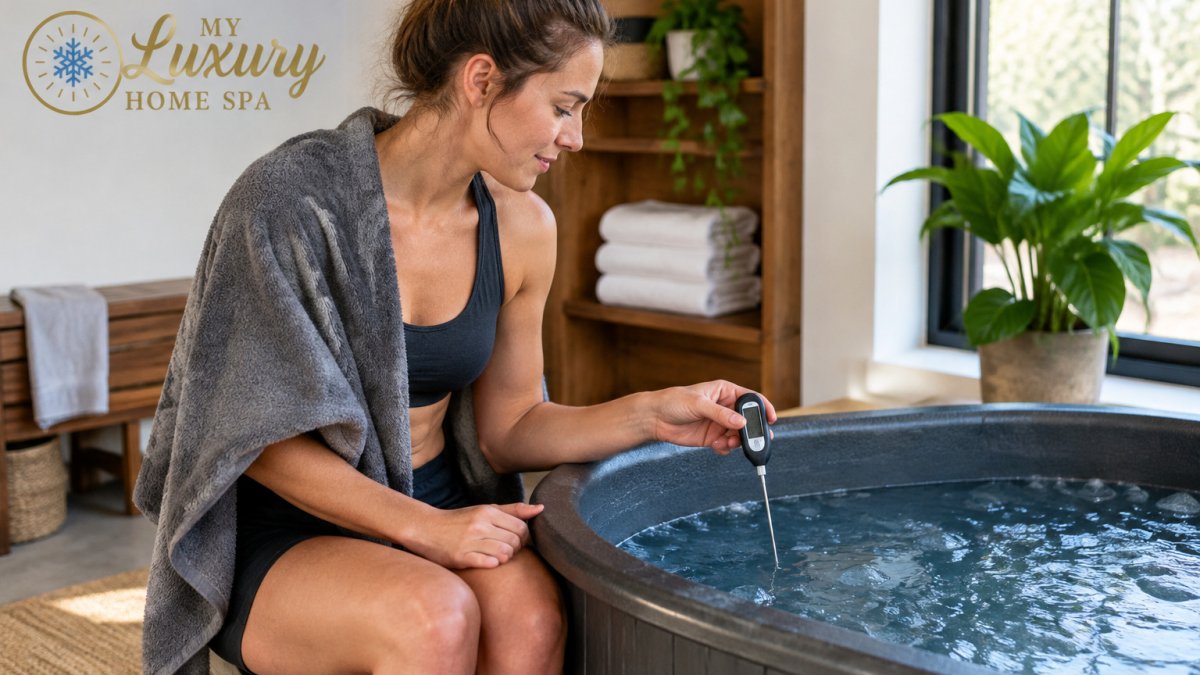
Stop if you feel unwell, experience increasing pain, persistent numbness or unusual skin changes. If you have reduced sensation or circulation problems, consult a healthcare professional before using cold immersion.
How Long to Stay in a Cold Plunge
There is no universally appropriate session length for knee recovery. Exposure time depends on water temperature, health, tolerance and the product instructions. Avoid treating longer sessions as better, and do not push through pain or loss of sensation.
If you are considering cold immersion for a medical concern, ask a clinician to recommend whether it is appropriate and, if so, what temperature and duration are suitable for you.
Cold Plunge Safety for Sore or Post-Surgical Knees
If you have recently had knee surgery, ask your surgeon or physical therapist specifically whether full-body immersion is appropriate and when it may be safe. Incision healing and your individual care plan matter. Do not use a plunge as a substitute for prescribed treatment.
Discuss relevant health conditions and medications. Circulation problems, Raynaud’s phenomenon, cold urticaria, reduced sensation or neuropathy, heart conditions, open wounds and some medications may affect cold exposure safety. Ask a clinician who knows your medical history rather than relying on a general online list.
Consider localized options. A device such as the Hyperice X 2 Knee is designed for targeted heat, cold, contrast and compression. It still may not be suitable for every person or condition; follow the manufacturer’s instructions and consult a clinician when appropriate.
Plan safe entry and exit. Use the steps or handholds recommended for your setup, keep the surrounding floor dry, and have a towel within reach. If mobility or balance is a concern, ask a clinician or qualified installer about safer access before using the tub.
Follow water-care and equipment instructions. Use the manufacturer’s sanitation schedule and electrical requirements. If you have a healing incision or other medical concern, ask your care team whether immersion is appropriate.
Stop the session if you develop sharp or worsening pain, persistent numbness, unusual skin changes, dizziness or feel unwell. Seek medical advice for a new injury or concerning symptoms.
Choosing Your Knee Recovery Option
Start with your practical requirements: access and entry, usable interior dimensions, temperature range, available space, maintenance and electrical needs. Confirm delivery access and setup requirements before ordering. For medical suitability, check with your healthcare professional.
To compare approaches, read our guide to cold plunge vs. ice bath recovery. Explore the Sierra Spa Cold Plunge or DreamPod Cold Plunge Barrel with Chiller if you are considering a full tub. If you are still deciding whether to buy, read our guide to whether a portable cold plunge is worth it for home use, or browse our cold plunge collection.
Ask us about your setup. My Luxury Home Spa is a veteran-owned retailer. Share your delivery ZIP code and planned placement, and we can help review product fit, delivery access, electrical requirements and written warranty information. For medical advice about knee pain or cold immersion, consult your healthcare professional.
Frequently Asked Questions
Is a cold plunge good for a knee injury?
Cold exposure may temporarily change how soreness or discomfort feels for some people, but evidence specific to knee injuries is limited. It does not heal ligaments, cartilage or bone or identify the cause of pain. If your knee is newly injured, swollen, hot or painful, consult a clinician before starting a cold-plunge routine.
Is cold plunging safe after knee replacement surgery?
Do not begin full-body immersion after knee replacement without clearance from your surgeon or physical therapist. Incision healing and your individual recovery plan affect whether immersion is appropriate and when. Follow your care team’s instructions.
How cold should a cold plunge be for knee recovery?
There is no single temperature established for knee recovery. Colder is not automatically better. Follow the manufacturer’s instructions and ask a clinician for guidance based on your health and reason for using cold immersion.
How long should you stay in a cold plunge?
There is no universally appropriate duration for everyone. Temperature, health, tolerance and the product instructions all matter. Do not push through pain, persistent numbness or feeling unwell. Ask a healthcare professional for individualized guidance, especially if you have circulation problems, diabetes, reduced sensation or cold sensitivity.


Leave a comment